Could the non-dyslexic condition be likened to a drop of rain that falls on a wide low valley? However far from the centre it may land, the gentle pull of gravity will attract it towards the middle.
The dyslexic condition by contrast could be seen as a drop of rain that falls on a high ridge of land. Despite the natural psychological tendency for people to want to conform to the ways of society, and however average the starting point, dyslexics find themselves pushed, as if by some strange gravity, away from the middle, towards conspicuous achievement to one side or hopeless failure on the other.
It has been said that people can be divided into two types: those who divide people into two types and those who don’t. A joke that pokes fun at any such simple division. Life can’t be so simple.
And yet, consider these two statistics:
1) The proportion of the prison population in the UK who are dyslexic is far higher than the proportion of the general population who are dyslexic. In other words, something is making it more likely for dyslexics to end up in prison than non-dyslexics.
2) The proportion of entrepreneurial business leaders who are dyslexic is far higher than the proportion of dyslexics in the general population. In other words, something is making it more likely for dyslexics to become successful entrepreneurs.
What condition could predispose people to two such opposite outcomes? A condition that makes it hard for the individual to function in the same way as the bulk of society.
The experience of being dyslexic in a non-dyslexic world is like being constantly out of step. You can see everyone else is marching in time. You desperately want to do the same. But it takes such effort that you quickly fall out of step again.
You have two options:
1) Give up.
2) Try to find a solution.
Finding a solution is something that no one can teach you. Most people are not even aware that there is anything to be taught. If you’re not marching in step you must be lazy, careless or just bad.
The PE teacher shouts to the class. Everyone put your right foot forward and your left foot back. The dyslexic kid gets it wrong. Again. Hasn’t he been listening? Are you lazy? Careless? Obstructive? Are you deaf? The child is concentrating hard, trying to figure out a method for remembering the names to these two sides. The teacher couldn’t teach a method, even if he recognised the problem. The teacher doesn’t have a method to remember left from right. He doesn’t need one.
Nor do any of the others in the class.
The life of a dyslexic is full of such challenges. Finding answers to problems that aren’t problems to anyone else. Learning to battle, to try harder, to mistrust the way things have always been done, to always look beyond the obvious, to find a new path that no one else has seen.
Or to not find a path. That is the other possibility. To accept the labels that the PE teacher shouts. Daydreaming, careless, obstructive or just plane bad. After all, these labels do offer an explanation. Which is easier to say: “I didn’t do my homework because it was too difficult”, or “I didn’t do my homework coz I just didn’t, coz I’m the bad boy of the class”?
Take a bright child into nursery at age 4. Give him tasks he can’t do five days a week. Every day tell him he’s daydreaming or being obstructive. Tell him he’s bad. How many years will he hold out before figuring it’s easier to be what the teacher thinks he is? How many years could you hold out?
There is a psychological experiment in which two groups of people are given three anagrams to solve. Group ‘A’ have an easy one to solve first and a harder one to solve second. Group ‘B’ have two impossible anagrams. For the third anagram, both groups are given the same. It is moderately difficult. Almost all of group ‘A’ manage to solve it. The first two puzzles taught them to expect success. Almost none of group ‘B’ manage to do it. They have been taught to expect failure.
If such patterns can be set up in adults in a few minutes, what will be the effect of 12 years in the school system?
Showing posts with label Dyslexia. Show all posts
Showing posts with label Dyslexia. Show all posts
Tuesday, November 30, 2010
Friday, November 26, 2010
Smatrphones, unfriendly lists and geographical order
How should I organise my DVD collection? By title? By director? By genre, date or lead actor? Or should I carry on with my present approach - periodically scooping up the DVDs that have accumulated on the floor next to the television and shovelling them onto a nearby shelf?
The same question presents itself when people try to organise papers in an office or products in a supermarket. Specialists in organisation have devised many different systems. However, there is no one-size-fits-all answer, as the system which works best will depend on the individual using it. An excellent book on the subject is ‘A Perfect Mess – the hidden benefits of disorder.’ Highly recommended.
The question is of particular interest to me because, like many dyslexics, my creative, chaotic mind and my tendency to live in the moment lead to a level of chaos that some might find distressing. People of a delicate disposition on entering my office are likely to throw their hands in the air and cry: ‘You’ve been burgled. I’ll phone the police.’
Happily technology is helping with this. The computer allows me to change the way my files are sorted with the click of a button. Alphabetical, by date of creation, by file type, by size. This suits me well, bringing my creative chaos back towards the zone I like to call ‘functional disorder’ (as opposed to ‘dysfunctional disorder’ or ‘dysfunctional order’.) I keep my work space as paperless as possible. A decent shredder helps.
Those who follow this blog will know that a few months ago I bought a Dell Streak smartphone, hoping thereby to drive myself towards a higher level of functionality. I’m happy to report that my experience with it has been excellent so far, helping me deal more efficiently with dates, times, communications and places.
But it is the last of these that has been the revelation. Places. Smartphones are data access / data collection devices. Through GPS they know where they are to within a few metres anywhere on the planet. And the number of people carrying them is rocketing. Put those facts together and a future opens up before us in which location is increasingly used as a means of organising and retrieving information. And THAT is an exciting prospect. For me, anyway. It matches the way my mind works. Data scattered across a map is infinitely more friendly to me than data neatly arranged in a list.
I hope we are on the brink of a more dyslexic-friendly future.

The same question presents itself when people try to organise papers in an office or products in a supermarket. Specialists in organisation have devised many different systems. However, there is no one-size-fits-all answer, as the system which works best will depend on the individual using it. An excellent book on the subject is ‘A Perfect Mess – the hidden benefits of disorder.’ Highly recommended.
The question is of particular interest to me because, like many dyslexics, my creative, chaotic mind and my tendency to live in the moment lead to a level of chaos that some might find distressing. People of a delicate disposition on entering my office are likely to throw their hands in the air and cry: ‘You’ve been burgled. I’ll phone the police.’
Happily technology is helping with this. The computer allows me to change the way my files are sorted with the click of a button. Alphabetical, by date of creation, by file type, by size. This suits me well, bringing my creative chaos back towards the zone I like to call ‘functional disorder’ (as opposed to ‘dysfunctional disorder’ or ‘dysfunctional order’.) I keep my work space as paperless as possible. A decent shredder helps.
Those who follow this blog will know that a few months ago I bought a Dell Streak smartphone, hoping thereby to drive myself towards a higher level of functionality. I’m happy to report that my experience with it has been excellent so far, helping me deal more efficiently with dates, times, communications and places.
But it is the last of these that has been the revelation. Places. Smartphones are data access / data collection devices. Through GPS they know where they are to within a few metres anywhere on the planet. And the number of people carrying them is rocketing. Put those facts together and a future opens up before us in which location is increasingly used as a means of organising and retrieving information. And THAT is an exciting prospect. For me, anyway. It matches the way my mind works. Data scattered across a map is infinitely more friendly to me than data neatly arranged in a list.
I hope we are on the brink of a more dyslexic-friendly future.

Thursday, November 25, 2010
Eddie Izzard speaks about dyslexia and creativity
The following interview of Eddie Izzard by Mark Lawson on BBC Radio 4’s ‘Front Row’ touches on the relationship between dyslexia and creativity. The link is here, but I don’t know how long it will remain live, so I have made a rough transcription of the relevant part.
Eddie Izzard: I couldn’t do that writing bit. I kept trying to do the writing bit and sitting down and it wouldn’t come out. I couldn’t seem to write as fast as... My mouth was faster than my hand. So I said, what - happens - when... if - chickens - take - over - the - world, what - would - they... you know, and by that time, I don’t care.
Mark Lawson: There have been suggestions of a link between dyslexia and surrealism and some people have suggested that poets may be on the spectrum of dyslexia because they go for one word and get another. But there is possibly a connection in your comedy.
Eddie Izzard: I felt there’s a relationship between dyslexia and creativity. I believe that dyslexia tends to make you go off in a weird direction. And then you go: ‘Oh, that’s nice’. And that could well lead to that. And it’s interesting you saying about poets. I didn’t know about that. But I just thought creativity in general and dyslexia.
Mark Lawson: The learning of scripts, does that affect you?
Eddie Izzard: It doesn’t seem to. If I read things now, I can read better than I could. I used to really stumble over words. Big words. Especially names of people from a foreign country. I’d just go blah-blah-blah in my head. That’s how I’d read them out. Now I can read them. I’m just a really slow reader.
They say: ‘Read that script by tonight.’ People would knock it off in an hour or so if they’re probably a fast reader. But I have to stay up to three or four in the morning reading it. It just takes me twice, three times as long.
I sub-vocalise. I can’t do that thing when you ‘wshhhhhhhhht’ which some people do. I’d love to be able to. I’ve even got a speed reading book but, I... couldn’t get through it. Which is a joke in itself. But it was actually true. I got the speed reading book and I read half of it.
This is just an extract from a fascinating interview.
Eddie Izzard: I couldn’t do that writing bit. I kept trying to do the writing bit and sitting down and it wouldn’t come out. I couldn’t seem to write as fast as... My mouth was faster than my hand. So I said, what - happens - when... if - chickens - take - over - the - world, what - would - they... you know, and by that time, I don’t care.
Mark Lawson: There have been suggestions of a link between dyslexia and surrealism and some people have suggested that poets may be on the spectrum of dyslexia because they go for one word and get another. But there is possibly a connection in your comedy.
Eddie Izzard: I felt there’s a relationship between dyslexia and creativity. I believe that dyslexia tends to make you go off in a weird direction. And then you go: ‘Oh, that’s nice’. And that could well lead to that. And it’s interesting you saying about poets. I didn’t know about that. But I just thought creativity in general and dyslexia.
Mark Lawson: The learning of scripts, does that affect you?
Eddie Izzard: It doesn’t seem to. If I read things now, I can read better than I could. I used to really stumble over words. Big words. Especially names of people from a foreign country. I’d just go blah-blah-blah in my head. That’s how I’d read them out. Now I can read them. I’m just a really slow reader.
They say: ‘Read that script by tonight.’ People would knock it off in an hour or so if they’re probably a fast reader. But I have to stay up to three or four in the morning reading it. It just takes me twice, three times as long.
I sub-vocalise. I can’t do that thing when you ‘wshhhhhhhhht’ which some people do. I’d love to be able to. I’ve even got a speed reading book but, I... couldn’t get through it. Which is a joke in itself. But it was actually true. I got the speed reading book and I read half of it.
This is just an extract from a fascinating interview.
Sunday, November 14, 2010
Dyslexic spelling from a 12 year old
I've turned up another example of dyslexic spelling. This time by a 12 year old. (Me again.) This one, which I found even deeper into the dust at the back of the shelf, came from a history project on Tudor England. And though you may have thought my spelling was singular at 13, this example from the year before is even more interesting.
It seems that I wasn't holding back so much in this work because I attempted words I had little idea of how to spell. The content of the writing is thus more interesting and the spelling more inventive.
This was my best work at the time.
The Sival War
In 1650 King-charls I was running in to det. So he whent to parlament to asck for mony Thay sead no so he brought some solders in to fors Them. but thay had herd abowt the atack and had escaped by bote so the sival war started.
One day the vilage was on one side and the next it was on the other. The vilagers did not like the ware and preferd to stay ought of it.
Parlimant's side was called the round heds the kings side was called the Cavalears. There was two mager batals. The batal of Marson Moor and the batal of Edgehill. The Roundheds worn the first and the cings men won the secand. Parlament wone the sivel war and Oliva cromwell was made leader of the country.

It seems that I wasn't holding back so much in this work because I attempted words I had little idea of how to spell. The content of the writing is thus more interesting and the spelling more inventive.
This was my best work at the time.
The Sival War
In 1650 King-charls I was running in to det. So he whent to parlament to asck for mony Thay sead no so he brought some solders in to fors Them. but thay had herd abowt the atack and had escaped by bote so the sival war started.
One day the vilage was on one side and the next it was on the other. The vilagers did not like the ware and preferd to stay ought of it.
Parlimant's side was called the round heds the kings side was called the Cavalears. There was two mager batals. The batal of Marson Moor and the batal of Edgehill. The Roundheds worn the first and the cings men won the secand. Parlament wone the sivel war and Oliva cromwell was made leader of the country.

Thursday, November 11, 2010
Dyslexic spelling
The following example of dyslexic spelling turned up today as I was moving office. At the back of a deep shelf, I discovered a long forgotten box of school books, including the diary I had once been required to write. I believe the school's idea was that writing an entry a day would gradually help me to overcome my problems.
Reading it now, I'm struck by three things. First, that in recording the events of my life, I could only write about things I had a chance of being able to spell. Second, that even after slimming down my language and carefully choosing the subject, there was no way through the writing maze without having to make frequent spelling guesses. And third, that my teachers were kind enough to only correct one or two words in each entry.
So here, chosen at random, are three days worth of diary from a 13 year old dyslexic, who bizarrely went on to become a novelist.
Yesterday in gaims I had a tutorial it was good fun. We did some spelling ruls. In the evening I was playing a gaim called T.R.I Tactics. It was fun. Yong siantist and mishon imposable were on telivition.
Yesterday we had an English test it was grosum. I did farly well. Also yesterday we went on a run. we were not timed so we could Just trot round. In the evening we went swiming it was a practis for the swiming gala.
To day in the morning in english we did a leson on wrighting informal leters. After that in gography we starled maps of the Mendips.
Comments are as always welcome. But please don't correct the spelling. Having mistakes pointed out gets tiresome after the first thirty or forty years.

Reading it now, I'm struck by three things. First, that in recording the events of my life, I could only write about things I had a chance of being able to spell. Second, that even after slimming down my language and carefully choosing the subject, there was no way through the writing maze without having to make frequent spelling guesses. And third, that my teachers were kind enough to only correct one or two words in each entry.
So here, chosen at random, are three days worth of diary from a 13 year old dyslexic, who bizarrely went on to become a novelist.
Yesterday in gaims I had a tutorial it was good fun. We did some spelling ruls. In the evening I was playing a gaim called T.R.I Tactics. It was fun. Yong siantist and mishon imposable were on telivition.
Yesterday we had an English test it was grosum. I did farly well. Also yesterday we went on a run. we were not timed so we could Just trot round. In the evening we went swiming it was a practis for the swiming gala.
To day in the morning in english we did a leson on wrighting informal leters. After that in gography we starled maps of the Mendips.
Comments are as always welcome. But please don't correct the spelling. Having mistakes pointed out gets tiresome after the first thirty or forty years.

Tuesday, August 17, 2010
Dyslexia, Memory, Socrates and Smartphones
Socrates disapproved of writing. It was not an aid to memory he said, but a replacement. If people could use symbols on a sheet of paper to record information, why would they bother to develop the latent power of their minds?
Socrates was right. As literacy spread, the use of memorization techniques dwindled. The art of memorization used to be part of the foundation of learning. But from the time I entered primary school to the day I graduated from university, only one teacher bothered to tell me how to remember things.
Even he only mentioned memory two times (as far as I can recall). Once to let us know that there was a difference between short, medium and long term memory. And once, after using a particularly entertaining simile, when he told us that the ruder the imagery we connect to a memory, the easier it would be to hold on to. (Alas I cannot repeat the image that he shared with us that day because it would never get through adult web content filters.)
Few today would say that the exchange of literacy for memorization technique was not a trade worth making. But for dyslexics, who may have particular difficulty with short term memory, memorization techniques can still be very useful. The loci system, for example, which has become a powerful tool for me, turning an area of weakness into a strength.
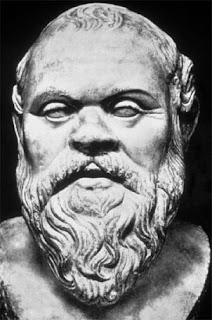
But if writing was an anathema to Socrates, what would he have said about the information revolution?
Followers of this blog will know that I recently bought a Dell Streak smartphone/tablet to help me with organization. I've had it a week now and have discovered that it is helping me to remember things in a way I had not anticipated.
How long until the parking expires? When should I head in to town to the Writers' Club meeting? When will I need to collect my wife from the train station on Wednesday? Two dyslexic issues converge on questions such as these: short term memory and tracking the flow of time. But by using the calendar alarm on the Dell Streak, I now don't need to remember. This may sound trivial, but it removes the layer of background anxiety that goes with struggling to do something one is congenitally poor at.
What would Socrates say? He'd probably tell me to work on the memory rather than using an external solution. But perhaps by removing the anxiety associated with remembering times, the smartphone will give me the space to do just that.
We will see.
Socrates was right. As literacy spread, the use of memorization techniques dwindled. The art of memorization used to be part of the foundation of learning. But from the time I entered primary school to the day I graduated from university, only one teacher bothered to tell me how to remember things.
Even he only mentioned memory two times (as far as I can recall). Once to let us know that there was a difference between short, medium and long term memory. And once, after using a particularly entertaining simile, when he told us that the ruder the imagery we connect to a memory, the easier it would be to hold on to. (Alas I cannot repeat the image that he shared with us that day because it would never get through adult web content filters.)
Few today would say that the exchange of literacy for memorization technique was not a trade worth making. But for dyslexics, who may have particular difficulty with short term memory, memorization techniques can still be very useful. The loci system, for example, which has become a powerful tool for me, turning an area of weakness into a strength.

But if writing was an anathema to Socrates, what would he have said about the information revolution?
Followers of this blog will know that I recently bought a Dell Streak smartphone/tablet to help me with organization. I've had it a week now and have discovered that it is helping me to remember things in a way I had not anticipated.
How long until the parking expires? When should I head in to town to the Writers' Club meeting? When will I need to collect my wife from the train station on Wednesday? Two dyslexic issues converge on questions such as these: short term memory and tracking the flow of time. But by using the calendar alarm on the Dell Streak, I now don't need to remember. This may sound trivial, but it removes the layer of background anxiety that goes with struggling to do something one is congenitally poor at.
What would Socrates say? He'd probably tell me to work on the memory rather than using an external solution. But perhaps by removing the anxiety associated with remembering times, the smartphone will give me the space to do just that.
We will see.
Thursday, August 12, 2010
Dyslexia the Dell Streak and Organization
Microsoft Word turned this dyslexic into a writer. Might the Dell Streak or some other smatrphone/tablet computer enable me to be super-organized?
I'm not one to harp on about the problems of dyslexia, as I am far more interested in the significant and often overlooked strengths. But here we do need to state the fact: dyslexics often have problems with organization. Find a really successful dyslexic and you will usually find a highly effective PA or partner standing close by.
Why is organization a problem? Because of a deficit in short term memory and problems tracking time/date combined an intense, creative tendency to make more lateral jumps than logical ones. I'm not going to show a photograph of my office to illustrate this. Even I blush sometimes. If you want to picture it in your mind, just meditate on the phrase 'creative chaos'.
Don't get me wrong, I wouldn't have my brain wired any other way. But this is a non-dyslexic world and I want to fit in if possible, so I'm always on the lookout for coping strategies.
Might the smartphone be the answer? Or perhaps a netbook computer? This is the question that has been tumbling in a pleasantly chaotic way around inside my head for the past year. My problem was that the netbook is just too big to carry round with me all the time - and thus would not work as a portable calendar. And the smartphone seemed just too small to read documents from with ease as well as some of the other features I was looking for. In short, I wanted something just in between these two classes of devices and nothing was on the market.
Enter the Dell Streak. Is it a tablet computer or a smartphone? A bit of both. In other words, it was exactly the class of device I was looking for.

It is a calendar, an alarm clock, a note taking device, a camera to take photos of receipts etc, a voice recorder, access to the Internet and e-mails, lists of contacts, names of people, documents I would no longer need to carry, an infinite supply of maps and it would tell me where I am when I get lost. Oh, and it makes phone calls too.
I believe this kind of technology will make a huge difference for many adult dyslexics, liberating them to integrate more effectively with the non-dyslexic world. As to whether the Dell Streak will be THE landmark device in this respect - there was only one way for me to find out.
So two days ago I went out and bought one. Or rather, the Carphone Warehouse gave me one and I agreed to pay a £35 contract every month for the next two years. Was it worth it? I'll report on my progress over the coming months.
I'm not one to harp on about the problems of dyslexia, as I am far more interested in the significant and often overlooked strengths. But here we do need to state the fact: dyslexics often have problems with organization. Find a really successful dyslexic and you will usually find a highly effective PA or partner standing close by.
Why is organization a problem? Because of a deficit in short term memory and problems tracking time/date combined an intense, creative tendency to make more lateral jumps than logical ones. I'm not going to show a photograph of my office to illustrate this. Even I blush sometimes. If you want to picture it in your mind, just meditate on the phrase 'creative chaos'.
Don't get me wrong, I wouldn't have my brain wired any other way. But this is a non-dyslexic world and I want to fit in if possible, so I'm always on the lookout for coping strategies.
Might the smartphone be the answer? Or perhaps a netbook computer? This is the question that has been tumbling in a pleasantly chaotic way around inside my head for the past year. My problem was that the netbook is just too big to carry round with me all the time - and thus would not work as a portable calendar. And the smartphone seemed just too small to read documents from with ease as well as some of the other features I was looking for. In short, I wanted something just in between these two classes of devices and nothing was on the market.
Enter the Dell Streak. Is it a tablet computer or a smartphone? A bit of both. In other words, it was exactly the class of device I was looking for.

It is a calendar, an alarm clock, a note taking device, a camera to take photos of receipts etc, a voice recorder, access to the Internet and e-mails, lists of contacts, names of people, documents I would no longer need to carry, an infinite supply of maps and it would tell me where I am when I get lost. Oh, and it makes phone calls too.
I believe this kind of technology will make a huge difference for many adult dyslexics, liberating them to integrate more effectively with the non-dyslexic world. As to whether the Dell Streak will be THE landmark device in this respect - there was only one way for me to find out.
So two days ago I went out and bought one. Or rather, the Carphone Warehouse gave me one and I agreed to pay a £35 contract every month for the next two years. Was it worth it? I'll report on my progress over the coming months.
Tuesday, July 20, 2010
The hidden benefits of Dyslexia
The term 'dyslexia' was first coined over a hundred and twenty years ago to describe students who had no deficit in intelligence but were nevertheless having difficulty acquiring literacy. It seemed a logical name. Dys-lexia. A problem with words.
Since that time, studies of dyslexia have naturally focused on helping dyslexic children lean to read and write. No surprise there. Get 100 dyslexics together and you will indeed have a crowd of people who have experienced difficulty with aspects of literacy. But look more closely and other quirky characteristics are revealed.
For example, many of the 100 dyslexics will have difficulty naming their left and right sides. Some may have problems reading the time from an analogue clock. Tracking the flow of time, short term memory and remembering names could also be an issue. Over the years researchers have been able to identify a cluster of such non-literacy-related problems.
But if you do get that group of dyslexics together and give them time to talk and compare notes, other commonalities start to emerge. For example, dyslexics are often very creative. They are lateral thinkers and problem solvers. Given a complex set of interrelationships, they easily see the whole picture and get to the root of issues. Many are able to read other people's emotions with stunning clarity.

No surprise then that so many successful people from the world of creative arts and the world of entrepreneurial business turn out to be dyslexic. Enhanced ability to think in three dimensions is another common attribute. Thus the ranks of top architects are also rich in dyslexics.
If we were to ask our group of 100 dyslexics whether they would like to be 'cured' of dyslexia - having the problems AND the advantages simultaneously removed by swallowing a pill - what would they say? What would you say? For me it would be an emphatic NO.
Not so much a learning disability, then. More a learning difference that manifests as disability in some situations (particularly in school) and manifests as a prodigious ability in others.
Since that time, studies of dyslexia have naturally focused on helping dyslexic children lean to read and write. No surprise there. Get 100 dyslexics together and you will indeed have a crowd of people who have experienced difficulty with aspects of literacy. But look more closely and other quirky characteristics are revealed.
For example, many of the 100 dyslexics will have difficulty naming their left and right sides. Some may have problems reading the time from an analogue clock. Tracking the flow of time, short term memory and remembering names could also be an issue. Over the years researchers have been able to identify a cluster of such non-literacy-related problems.
But if you do get that group of dyslexics together and give them time to talk and compare notes, other commonalities start to emerge. For example, dyslexics are often very creative. They are lateral thinkers and problem solvers. Given a complex set of interrelationships, they easily see the whole picture and get to the root of issues. Many are able to read other people's emotions with stunning clarity.
No surprise then that so many successful people from the world of creative arts and the world of entrepreneurial business turn out to be dyslexic. Enhanced ability to think in three dimensions is another common attribute. Thus the ranks of top architects are also rich in dyslexics.
If we were to ask our group of 100 dyslexics whether they would like to be 'cured' of dyslexia - having the problems AND the advantages simultaneously removed by swallowing a pill - what would they say? What would you say? For me it would be an emphatic NO.
Not so much a learning disability, then. More a learning difference that manifests as disability in some situations (particularly in school) and manifests as a prodigious ability in others.
Thursday, July 01, 2010
New Microphone
A couple of days ago, I wrote about the Marantz PMD 661 field recorder. I'm still extremely pleased with the way it works with my Rode shotgun microphone. That covers my film making needs. But I do intend to use the recorder for audio interviews in the near future, and realised that a different kind of microphone is necessary for that.
For that usage I need an omnidirectional rather than a shotgun microphone. I also need it to have shielding to prevent all that nasty handling noise. I don't have a background in audio technology, so need to rely on reviews to guide my choice of equipment. This was fairly easy with the field recorders - which are extensively reviewed on the Internet. But with microphones I had a harder time. It seems that very few people choose to review microphones. Perhaps I shouldn't have been surprised to discover that.
For that usage I need an omnidirectional rather than a shotgun microphone. I also need it to have shielding to prevent all that nasty handling noise. I don't have a background in audio technology, so need to rely on reviews to guide my choice of equipment. This was fairly easy with the field recorders - which are extensively reviewed on the Internet. But with microphones I had a harder time. It seems that very few people choose to review microphones. Perhaps I shouldn't have been surprised to discover that.

I eventually decided on the AKG D230. I managed to buy a second hand one on Ebay - which should arrive sometime in the next couple of weeks. When it does I will offer my own very inexpert review.
As for the question of what audio interviews am I intending to conduct - it is connected to my interest in dyslexia. I'll say more about that in a future blog post.
Monday, May 24, 2010
Miss Garnet's Angel
To have closure or not to have closure is a question all storytellers must face. Does the protagonist definitely achieve or definitely not achieve the victory? Are all the secondary plots neatly tied up? Is every single thread accounted for?
Perhaps it is not a question of closure or lack of it, but the degree of neatness.
These were questions that tumbled around in my head last Thursday evening on driving home after an excellent talk by the bestselling novelist Salley Vickers.
Salley does not plot out her novels, she told us. She writes without knowing where she is going, prompted presumably by the unconscious mind. Although her books are not autobiographical, she weaves in threads from her own experience. This became clear as she wove the narrative of her talk, dipping into life experiences and into her novels with such lightness of touch that it was easy to become confused as to which was which.
These things struck me about the writing process as she described it: she reads her work out aloud to herself as she edits it, she walks when she needs to resolve issues and she never reads her own books once they are published. She is also fascinated by the workings of memory and the process of natural selection on ancient stories that survive today. These things struck me because in those respects I am exactly the same. She also visits art galleries when looking for answers, something I have not done but am now resolved to try.
But back to those tumbling thoughts. Have you ever wondered why some stories cling on to the mind after you have finished with them? Some talks too. I was so intrigued by her talk that I bought a copy of her novel Miss Garnet’s Angel.

My one regret about dyslexia is that it is a barrier to my reading more. Reading takes the work of my whole mind. In order to read a whole novel I need to set aside a chunk of time. You can judge then, how much Salley’s talk had clung to my mind, when I say that on getting home I started reading her novel. And that I pressed on to the end three and a half days later.
The story is tumbling right now in my head. I have the feeling that it will still be there tomorrow. Such is the quality of narratives which do not travel directly from A to B, but meander and bifurcate and recombine, beguiling the logical mind. Perhaps it is a quality of stories that are written with the unconscious mind in the driving seat. And perhaps it is a quality also of stories where all the threads are not quite so neatly tied back together at the end.
They say Miss Garnet’s Angel was a word of mouth bestseller. Having read it, I am not surprised. It is as delightful as was her talk.
Perhaps it is not a question of closure or lack of it, but the degree of neatness.
These were questions that tumbled around in my head last Thursday evening on driving home after an excellent talk by the bestselling novelist Salley Vickers.
Salley does not plot out her novels, she told us. She writes without knowing where she is going, prompted presumably by the unconscious mind. Although her books are not autobiographical, she weaves in threads from her own experience. This became clear as she wove the narrative of her talk, dipping into life experiences and into her novels with such lightness of touch that it was easy to become confused as to which was which.
These things struck me about the writing process as she described it: she reads her work out aloud to herself as she edits it, she walks when she needs to resolve issues and she never reads her own books once they are published. She is also fascinated by the workings of memory and the process of natural selection on ancient stories that survive today. These things struck me because in those respects I am exactly the same. She also visits art galleries when looking for answers, something I have not done but am now resolved to try.
But back to those tumbling thoughts. Have you ever wondered why some stories cling on to the mind after you have finished with them? Some talks too. I was so intrigued by her talk that I bought a copy of her novel Miss Garnet’s Angel.
My one regret about dyslexia is that it is a barrier to my reading more. Reading takes the work of my whole mind. In order to read a whole novel I need to set aside a chunk of time. You can judge then, how much Salley’s talk had clung to my mind, when I say that on getting home I started reading her novel. And that I pressed on to the end three and a half days later.
The story is tumbling right now in my head. I have the feeling that it will still be there tomorrow. Such is the quality of narratives which do not travel directly from A to B, but meander and bifurcate and recombine, beguiling the logical mind. Perhaps it is a quality of stories that are written with the unconscious mind in the driving seat. And perhaps it is a quality also of stories where all the threads are not quite so neatly tied back together at the end.
They say Miss Garnet’s Angel was a word of mouth bestseller. Having read it, I am not surprised. It is as delightful as was her talk.
Sunday, November 29, 2009
Writing in a digital future
As a dyslexic author, I have a somewhat conflicted relationship with the written word. Most authors and publishers are quick to say that people will never give up books and reading. And whilst I do believe that is true, I am convinced that other modes of creative expression and information transfer will grow in significance.
In our pre-literate past dyslexics were not disabled. And in a future where recorded image and sound are given more weight, our present sense of disability will recede. Indeed, I believe this is already happening.
Imagine that I wanted to find out what it would take to install solar panels on the roof of my house. Twenty years ago, I’d probably have headed off to the library to find a book on the subject. Ten years ago, I might well have searched the Internet for an article to read. Today, I’d go to straight to YouTube or Vimeo and find a video tutorial.
We live, as they say, in interesting times. None of us know how writing and digital media will develop in the coming decades. But change is happening. Change is accelerating.
Hang on to your hats.
(Irony warning – yes, I have noticed that this article comes to you via the very medium that I appear to be dissing. No need to point it out.)
In our pre-literate past dyslexics were not disabled. And in a future where recorded image and sound are given more weight, our present sense of disability will recede. Indeed, I believe this is already happening.
Imagine that I wanted to find out what it would take to install solar panels on the roof of my house. Twenty years ago, I’d probably have headed off to the library to find a book on the subject. Ten years ago, I might well have searched the Internet for an article to read. Today, I’d go to straight to YouTube or Vimeo and find a video tutorial.
We live, as they say, in interesting times. None of us know how writing and digital media will develop in the coming decades. But change is happening. Change is accelerating.
Hang on to your hats.
(Irony warning – yes, I have noticed that this article comes to you via the very medium that I appear to be dissing. No need to point it out.)
Tuesday, October 13, 2009
Research for novelists
"How do you do your research?" is the question I am most often asked at public readings.
"I don't!" is the first answer that comes to mind.
But the deeper truth is that I am not aware of doing research. This is because I accumulate so much strange information on account of my insatiable curiosity. Some might call it 'being nosey'. I prefer to look at it as a vocation.
Research is not usually a conscious process. It is a way of life.
How about this one: a safe door can get jammed closed in cold weather because a partial vacuum is formed inside. Or this: thieves sometimes try to steal slate gravestones from cemeteries because the slate itself is so valuable. Or this: Policemen trying to keep warm sometimes put their hands inside their stab vests.
I wouldn't have known where to look to find this kind of information. But it is all gold dust to a crime writer. And it is free. You just have to keep your eyes and ears open.
Perhaps this approach comes from my dyslexia. It is easier for me to see things than to read them. And perhaps it comes from laziness.
"I don't!" is the first answer that comes to mind.
But the deeper truth is that I am not aware of doing research. This is because I accumulate so much strange information on account of my insatiable curiosity. Some might call it 'being nosey'. I prefer to look at it as a vocation.
Research is not usually a conscious process. It is a way of life.
How about this one: a safe door can get jammed closed in cold weather because a partial vacuum is formed inside. Or this: thieves sometimes try to steal slate gravestones from cemeteries because the slate itself is so valuable. Or this: Policemen trying to keep warm sometimes put their hands inside their stab vests.
I wouldn't have known where to look to find this kind of information. But it is all gold dust to a crime writer. And it is free. You just have to keep your eyes and ears open.
Perhaps this approach comes from my dyslexia. It is easier for me to see things than to read them. And perhaps it comes from laziness.
Thursday, July 30, 2009
Yarn Podcast 1
Being a dyslexic novelist, I have a somewhat conflicted relationship with books. I love stories but accessing them through text has always been a challenge. Perhaps that is why I set out on a journey to try to understand why some people love reading so much that they join book clubs or reading groups.
Below is the opening of the documentary I made to record my journey. In the coming days and weeks I will be podcasting the whole film in 6 episodes.
Below is the opening of the documentary I made to record my journey. In the coming days and weeks I will be podcasting the whole film in 6 episodes.
Tuesday, July 28, 2009
Being Dyslexic and Empathy
www.beingdyslexic.com is, as the name implies, a forum for people to discuss issues relating to their dyslexia. I have been a daily visitor to the website since I came across it some months ago. It has been refreshing to learn about the experiences of dyslexics directly from dyslexics instead of from reading the conclusions of research projects. Why? Because the issues raised are the ones that concern the dyslexics themselves.
Instead of fixating on reading and writing, the discussions range from talking about time management to empathy, from creativity to relationships. From this dyslexic-centred discussion several surprises emerge.
I have for some years wondered if there could be a connection between dyslexia and the degree of ability to recall emotions and to sense the emotions of others. My suspicions emerged from a chance remark by a dyslexic actor who said she relied on her strong “emotional memory” to help her get into role. This chimed with my own experience. As a writer I use the ability to recall and relive emotions when I am creating characters and working out what they must be feeling and how they will act as a result.
But when I asked dyslexic professionals I was told that there was no such relationship. I searched the internet and found no references to research on the subject. If such a connection did exist it would be a dyslexic strength. It would be something that dyslexics could use to give them an advantage.
Then someone posted a question on the ‘Being Dyslexic” forum. If you had a superpower connected to your dyslexia, the questioner asked, what would it be?
A stream of answers came through over the following days saying that the superpower they already had was the ability to read other people’s emotions – to know what they were thinking or feeling. It was such a strong effect for some of these people that it felt uncannily like ESP.
There is no doubt that in a predominantly non-dyslexic world, dyslexia presents itself as a disability. But in my opinion, the anomalous strengths of dyslexics are systematically under researched and under reported.
Which brings me to one of the other surprises from the being dyslexic forums – the spread of attitudes people have to their own dyslexia. Some hate it and wish it would go away, feeling it is blighting their lives. Others see it as a source of strength and part of who they are. The variation is huge. Now THAT is an area which could do with some research. It might not help anyone spell better, so educationalists might not regard it as a priority. But I’d rather be happy than get my spelling right every time.
Perhaps my priorities are skewed.
Instead of fixating on reading and writing, the discussions range from talking about time management to empathy, from creativity to relationships. From this dyslexic-centred discussion several surprises emerge.
I have for some years wondered if there could be a connection between dyslexia and the degree of ability to recall emotions and to sense the emotions of others. My suspicions emerged from a chance remark by a dyslexic actor who said she relied on her strong “emotional memory” to help her get into role. This chimed with my own experience. As a writer I use the ability to recall and relive emotions when I am creating characters and working out what they must be feeling and how they will act as a result.
But when I asked dyslexic professionals I was told that there was no such relationship. I searched the internet and found no references to research on the subject. If such a connection did exist it would be a dyslexic strength. It would be something that dyslexics could use to give them an advantage.
Then someone posted a question on the ‘Being Dyslexic” forum. If you had a superpower connected to your dyslexia, the questioner asked, what would it be?
A stream of answers came through over the following days saying that the superpower they already had was the ability to read other people’s emotions – to know what they were thinking or feeling. It was such a strong effect for some of these people that it felt uncannily like ESP.
There is no doubt that in a predominantly non-dyslexic world, dyslexia presents itself as a disability. But in my opinion, the anomalous strengths of dyslexics are systematically under researched and under reported.
Which brings me to one of the other surprises from the being dyslexic forums – the spread of attitudes people have to their own dyslexia. Some hate it and wish it would go away, feeling it is blighting their lives. Others see it as a source of strength and part of who they are. The variation is huge. Now THAT is an area which could do with some research. It might not help anyone spell better, so educationalists might not regard it as a priority. But I’d rather be happy than get my spelling right every time.
Perhaps my priorities are skewed.
Thursday, July 09, 2009
Thinking Differently in the Digital Age
Some people think differently from the rest of the crowd. The different thinkers don't do so well in times when the mainstream crowd has life all figured out. At such times the different thinkers are easy to spot. They're the ones doing crazy stuff, heading for disaster. Or ridicule.
But in times of rapid change, when the mainstream crowd are hanging on to modes of thought and behaviour that no longer work - that is when we need our different thinkers. In my opinion, that is why dyslexics and other kinds of people who tend to think differently are so valuable to society.
Take the example of the movie industry today. Digital production and digital distribution have arrived but the industry has not yet adapted. Or look at the the business of book publication. Or music. There is a tendency for people rooted in the way things were to see the new technology as a way of making slight modifications to the status quo. This is when the different thinkers shine.
I came across the following video on Chris Jone's blog. It is the work of two film makers Arin Crumley and Susan Buice, creators of Four Eyed Monsters. I this completely inspirational. If you are interested in the collision of old media and the new digital age, this is well worth the half hour it takes to watch.
But in times of rapid change, when the mainstream crowd are hanging on to modes of thought and behaviour that no longer work - that is when we need our different thinkers. In my opinion, that is why dyslexics and other kinds of people who tend to think differently are so valuable to society.
Take the example of the movie industry today. Digital production and digital distribution have arrived but the industry has not yet adapted. Or look at the the business of book publication. Or music. There is a tendency for people rooted in the way things were to see the new technology as a way of making slight modifications to the status quo. This is when the different thinkers shine.
I came across the following video on Chris Jone's blog. It is the work of two film makers Arin Crumley and Susan Buice, creators of Four Eyed Monsters. I this completely inspirational. If you are interested in the collision of old media and the new digital age, this is well worth the half hour it takes to watch.
Wednesday, June 24, 2009
Dyslexia experiences in primary school
Following yesterday's discussion regarding Sir Jim Rose's report on dyslexia, I have been thinking again about my own experiences in primary school. What follows is an extract from the book I have been writing about dyslexia. I don't usually post extracts of my work in progress on here, but in this case it seems relevant.
When I entered school, at the age of five, my teachers discovered that on the scale of ability with which they measured all pupils, I defined the lowest point.
‘You’ve had two bright children,’ they told my surprised parents. ‘You were lucky in that. But this one will never achieve anything.’
My primary school was a solemn looking building of grey stone and Welsh slate. Carved into the lintel of one of the two doorways onto the street was the word ‘BOYS’. The word ‘GIRLS’ adorned the other. But by the 1960s we all jostled through the same entrance in a co-educational scrum. There were thirty of us sitting on our small chairs behind small desks. Fresh faced and, to a greater or lesser degree, innocent.
The teachers must have clicked that something was wrong the first time they laid eyes on my exercise book. I was not the same as the others. My attempts to form letters on the page were no more than scribbles along a line. Every week that passed reinforced the initial impression. Other children wrote words then sentences. I wrote nothing that was legible.
I was inferior to the other children in almost every respect. I couldn’t read or write. I lacked that bad-boy charisma worn so effectively by the other under-achievers. Coming from an academically inclined family, I knew nothing of football or rugby. The least disastrous lesson for me was art, in which I achieved mediocrity and a blissful, if temporary, invisibility.
Not that I started out trying to be invisible. I toddled through the doors of that stone building and across the squeaky wooden floor with an innocent positivity and a belief that all children were more or less like me.
There was no single moment when I realised my mistake. Understanding grew in two phases. First was my dawning awareness that I was different from my classmates because of my stupidity.
I remember sitting, bent low over a comprehension exercise, my left arm forming an L shaped screen around the paper. I was seven and could string letters together by that stage, though I didn’t want anyone to see my clumsy scrawl.
I could also read some of the words on the printed page, my mouth miming the vowels as my finger hovered next to them. But to read a sentence was a challenge. I had to decode the words one by one. I had to keep them all in my mind, remembering the beginning of the sentence by the time I eventually arrived at the end of it. That took ferocious concentration. Enough to set up a tightness across my forehead, as if I was being gripped there by a vice. If at first the meaning didn’t come, I could always tighten the vice a little more. I was good at concentrating. I was getting lots of practice.
By the time I’d struggled through two of the ten questions, other children were finishing the whole activity. One by one, they trotted up to the teacher’s desk, books in hand, hopeful expressions on their faces. One by one she invited them round to stand next to her as she marked their work. A line of ticks down the side of the page. A smile. A word about something they could do better. One by one she released them to play or draw pictures.
Finally the allotted time had passed. I approach her desk, last in the line of stragglers, having attempted only eight out of the ten questions, exhausted from the effort. There was no time for marking. She had to move us on to a new activity. The bright kids were rested and now they were and starting to get bored.
It was the following day before I could collect my work. My scrawl of pencil shot through with red biro corrections. A line of crosses down the side of the page. ‘Three out of ten See me!’
I approached her desk with dread, wanting the world to disappear into blackness.
How, she wanted to know, could I be getting the spelling of words wrong, when they were there in the printed text on the opposite page? It could only be carelessness. I should take more pride in my work.
‘See me.’
I was seeing her. That concerned expression. How could she get through to me? I may have struggled to read the words on the page, but I could read her clearly enough. I’d always been able to know what people were feeling, to feel the echoes of their emotions in myself. That over-active empathetic sense.
Such a nice boy I seemed. An enigma though. I looked to be trying. But the evidence was clear. I must be lazy. Or stupid. Although neither description seemed quite to fit. If there was only more time, perhaps she could have taken me aside and worked out what was wrong. But time only for an admonition. You must try harder. Try harder. Try harder. I don’t know what you were thinking of - handing in a piece of work like this. Were you day dreaming again? Next time, try harder.
So I did. Always harder. Sharpening and compressing my focus. There had to be a way of doing it. Everyone else was doing it. Just a little harder.
There is a point when an instrument has been strained so far beyond its tolerance that it snaps. But the brain it seems is not like that. There is always more concentration to be extracted. I just had to try a little bit harder...
When I entered school, at the age of five, my teachers discovered that on the scale of ability with which they measured all pupils, I defined the lowest point.
‘You’ve had two bright children,’ they told my surprised parents. ‘You were lucky in that. But this one will never achieve anything.’
My primary school was a solemn looking building of grey stone and Welsh slate. Carved into the lintel of one of the two doorways onto the street was the word ‘BOYS’. The word ‘GIRLS’ adorned the other. But by the 1960s we all jostled through the same entrance in a co-educational scrum. There were thirty of us sitting on our small chairs behind small desks. Fresh faced and, to a greater or lesser degree, innocent.
The teachers must have clicked that something was wrong the first time they laid eyes on my exercise book. I was not the same as the others. My attempts to form letters on the page were no more than scribbles along a line. Every week that passed reinforced the initial impression. Other children wrote words then sentences. I wrote nothing that was legible.
I was inferior to the other children in almost every respect. I couldn’t read or write. I lacked that bad-boy charisma worn so effectively by the other under-achievers. Coming from an academically inclined family, I knew nothing of football or rugby. The least disastrous lesson for me was art, in which I achieved mediocrity and a blissful, if temporary, invisibility.
Not that I started out trying to be invisible. I toddled through the doors of that stone building and across the squeaky wooden floor with an innocent positivity and a belief that all children were more or less like me.
There was no single moment when I realised my mistake. Understanding grew in two phases. First was my dawning awareness that I was different from my classmates because of my stupidity.
I remember sitting, bent low over a comprehension exercise, my left arm forming an L shaped screen around the paper. I was seven and could string letters together by that stage, though I didn’t want anyone to see my clumsy scrawl.
I could also read some of the words on the printed page, my mouth miming the vowels as my finger hovered next to them. But to read a sentence was a challenge. I had to decode the words one by one. I had to keep them all in my mind, remembering the beginning of the sentence by the time I eventually arrived at the end of it. That took ferocious concentration. Enough to set up a tightness across my forehead, as if I was being gripped there by a vice. If at first the meaning didn’t come, I could always tighten the vice a little more. I was good at concentrating. I was getting lots of practice.
By the time I’d struggled through two of the ten questions, other children were finishing the whole activity. One by one, they trotted up to the teacher’s desk, books in hand, hopeful expressions on their faces. One by one she invited them round to stand next to her as she marked their work. A line of ticks down the side of the page. A smile. A word about something they could do better. One by one she released them to play or draw pictures.
Finally the allotted time had passed. I approach her desk, last in the line of stragglers, having attempted only eight out of the ten questions, exhausted from the effort. There was no time for marking. She had to move us on to a new activity. The bright kids were rested and now they were and starting to get bored.
It was the following day before I could collect my work. My scrawl of pencil shot through with red biro corrections. A line of crosses down the side of the page. ‘Three out of ten See me!’
I approached her desk with dread, wanting the world to disappear into blackness.
How, she wanted to know, could I be getting the spelling of words wrong, when they were there in the printed text on the opposite page? It could only be carelessness. I should take more pride in my work.
‘See me.’
I was seeing her. That concerned expression. How could she get through to me? I may have struggled to read the words on the page, but I could read her clearly enough. I’d always been able to know what people were feeling, to feel the echoes of their emotions in myself. That over-active empathetic sense.
Such a nice boy I seemed. An enigma though. I looked to be trying. But the evidence was clear. I must be lazy. Or stupid. Although neither description seemed quite to fit. If there was only more time, perhaps she could have taken me aside and worked out what was wrong. But time only for an admonition. You must try harder. Try harder. Try harder. I don’t know what you were thinking of - handing in a piece of work like this. Were you day dreaming again? Next time, try harder.
So I did. Always harder. Sharpening and compressing my focus. There had to be a way of doing it. Everyone else was doing it. Just a little harder.
There is a point when an instrument has been strained so far beyond its tolerance that it snaps. But the brain it seems is not like that. There is always more concentration to be extracted. I just had to try a little bit harder...
Tuesday, June 23, 2009
Sir Jim Rose report on Dyslexia
The long awaited report by Sir Jim Rose on "Identifying and Teaching Children and Young People with Dyslexia and Literacy Difficulties" has been published.
Significantly, the report provides an authoritative statement that dyslexia does exist.
It also offers a description of dyslexia, which seems likely to be helpful in reducing confusion and may well become a standard definition. (The existence of a multiplicity of definitions has curiously been used in the past as an argument against existence of the condition. Some strange logic there.)
The report admits that research into dyslexia has tended to keep a narrow focus on reading and writing, even though many dyslexics would regard other issues as more significant. It does mention (in section 5) some of the related issues that dyslexics face - though this is touched on rather briefly.
On the negative side, the report does seem to fall too easily into the language of disability. If there are references to typical dyslexic strengths, I have been unable to find them. It seems to me that this was a missed opportunity.
Dyslexic strengths are under researched and under reported. When we look at the widely published lists of successful dyslexics, we are reminded of people who learned to harness exactly these strengths.
Significantly, the report provides an authoritative statement that dyslexia does exist.
It also offers a description of dyslexia, which seems likely to be helpful in reducing confusion and may well become a standard definition. (The existence of a multiplicity of definitions has curiously been used in the past as an argument against existence of the condition. Some strange logic there.)
The report admits that research into dyslexia has tended to keep a narrow focus on reading and writing, even though many dyslexics would regard other issues as more significant. It does mention (in section 5) some of the related issues that dyslexics face - though this is touched on rather briefly.
On the negative side, the report does seem to fall too easily into the language of disability. If there are references to typical dyslexic strengths, I have been unable to find them. It seems to me that this was a missed opportunity.
Dyslexic strengths are under researched and under reported. When we look at the widely published lists of successful dyslexics, we are reminded of people who learned to harness exactly these strengths.
Saturday, June 13, 2009
Smartphones for Dyslexics - my decision
Thanks to everyone who gave me suggestions and advice on moving towards better time management through technology. (My dyslexia gives me a rather fluid and vague grasp of the flow of time - which tends to get me into interesting situations occasionally). I have listened to what you've told me. I've also gone shopping and looked at different models of netbook and smartphone. And prices, of course.

Ivory kindly let me play around with her iPhone on Thursday - which has given me more of an idea about how I might use one.
Yesterday I came to a decision. I'm going to shift a load of my organizational stuff onto Google calendar, google mail etc. But I am going to hold back from buying any gadgets for a few months. (I am having a fairly intensive period of writing during the next 6 months, so my organizational load will be limited). Then, when the next google phone comes out, I will probably go for that. Presumably it will be called the G2. By that time, I'll probably be renewing my laptop as well - and will go for one of the long battery life Samsung netbooks.
Why the Google phone rather than the iPhone? Simply because of their open-source policy. Whilst I have complained about Google's attitude in trampling over copyright holder's rights, I am perfectly happy for them to release their own intellectual property to the creative commons.
Apple's more-or-less opposite approach of centralisation and secrecy seems less wholesome and, however beautiful the iPhone is, I feel uncomfortable with it.
So there we go - thanks again for the input.
Ivory kindly let me play around with her iPhone on Thursday - which has given me more of an idea about how I might use one.
Yesterday I came to a decision. I'm going to shift a load of my organizational stuff onto Google calendar, google mail etc. But I am going to hold back from buying any gadgets for a few months. (I am having a fairly intensive period of writing during the next 6 months, so my organizational load will be limited). Then, when the next google phone comes out, I will probably go for that. Presumably it will be called the G2. By that time, I'll probably be renewing my laptop as well - and will go for one of the long battery life Samsung netbooks.
Why the Google phone rather than the iPhone? Simply because of their open-source policy. Whilst I have complained about Google's attitude in trampling over copyright holder's rights, I am perfectly happy for them to release their own intellectual property to the creative commons.
Apple's more-or-less opposite approach of centralisation and secrecy seems less wholesome and, however beautiful the iPhone is, I feel uncomfortable with it.
So there we go - thanks again for the input.
Tuesday, June 09, 2009
3G Devices for the Dyslexic
The aborigines don't have calendars. I was raised by the local tribe. I asked a tribal elder when I was born. He said, "In the summertime."


Any advice?
So says Crocodile Dundee in the film of the same name. I have no idea if this represents the truth of those cultures or not, but it sure represents an attitude to time with which I would feel comfortable.
A certain vagueness about time serves me well in my work as a writer. But there are occasions (I almost said 'times') when I need to integrate with the modern world. So - after my recent rich harvest of confusion, I am looking into possible technical fixes.
How about an iPhone, a blackberry, a G1 or a netbook?
The idea being that I could use it to access a Google calendar - which I could also allow family and work friends to access. It could - by all accounts - also be used to give me reminders, alarms etc at different times and on different days.
Well, I am thinking about this. It means spending money, of course. But if it works it might enable me to earn more. Hmmm...
Any advice?
Monday, June 08, 2009
My strange but (mostly) enjoyable Odyssey
For those of you who follow my sometimes strange and hopefully enjoyable Odyssey, today's events may seem like a microcosm of my life as a whole.
Here is the event I was going to.
But here is the event that was actually taking place.
If you read very closely, you will see that the first link gives today's date - June 8th, whereas the second link gives the date July 8th. (The pages may be changed by the time you read them, of course).
Somehow - entirely my own fault, I am sure, I copied the date from the literature network web page into my diary. So, people of Hadfield, when I turn up in exactly one month from now, you will know how much I value you, because I will have done the drive twice.
Yes, this sort of thing happens to dyslexics. If you read the usual dyslexia check-list - which coincidentally I found myself browsing as I sat in my car outside the closed library - you will see that one of the important signs of dyslexia is: "Mixing up dates and times and turning up for events on the wrong day."
The worst thing about turning up for an event on a month early it is that it causes embarrassment to other people. "You didn't drive all that way did you? I am so sorry for you!" But I decided years ago to embrace this aspect of who I am with open arms. If I find myself in this situation, make the most of it.
Which today I did. The drive was beautiful and surprisingly calming. I arrived relaxed, sat in the car and came up with some excellent ideas which I think are going to be extremely useful. Among them are a series of excellent title possibilities for a movie idea that I have been working on with a couple of people (a project I have not said much about on here). Then I enjoyed the mountainous views on the way back.
In today's situation my philosophy works. The problem comes when I get something wrong the other way around - as I did last Saturday. I got mixed up with the times and dates and did not realise I should be giving a class. This is what I really regret. To be honest, I have done it so many times over the years that I am emotionally sensitized. When I realised - after it was too late - I was very distressed. I still am. I hate letting people down.
What should I so about this - I really don't know. Encourage people to send me a reminder a couple of days before? Try to make it up to people by offering them something by way of compensation? Probably all of the above.
And try to lighten up about it. It shouldn't reduce me to tears.
Here is the event I was going to.
But here is the event that was actually taking place.
If you read very closely, you will see that the first link gives today's date - June 8th, whereas the second link gives the date July 8th. (The pages may be changed by the time you read them, of course).
Somehow - entirely my own fault, I am sure, I copied the date from the literature network web page into my diary. So, people of Hadfield, when I turn up in exactly one month from now, you will know how much I value you, because I will have done the drive twice.
Yes, this sort of thing happens to dyslexics. If you read the usual dyslexia check-list - which coincidentally I found myself browsing as I sat in my car outside the closed library - you will see that one of the important signs of dyslexia is: "Mixing up dates and times and turning up for events on the wrong day."
The worst thing about turning up for an event on a month early it is that it causes embarrassment to other people. "You didn't drive all that way did you? I am so sorry for you!" But I decided years ago to embrace this aspect of who I am with open arms. If I find myself in this situation, make the most of it.
Which today I did. The drive was beautiful and surprisingly calming. I arrived relaxed, sat in the car and came up with some excellent ideas which I think are going to be extremely useful. Among them are a series of excellent title possibilities for a movie idea that I have been working on with a couple of people (a project I have not said much about on here). Then I enjoyed the mountainous views on the way back.
In today's situation my philosophy works. The problem comes when I get something wrong the other way around - as I did last Saturday. I got mixed up with the times and dates and did not realise I should be giving a class. This is what I really regret. To be honest, I have done it so many times over the years that I am emotionally sensitized. When I realised - after it was too late - I was very distressed. I still am. I hate letting people down.
What should I so about this - I really don't know. Encourage people to send me a reminder a couple of days before? Try to make it up to people by offering them something by way of compensation? Probably all of the above.
And try to lighten up about it. It shouldn't reduce me to tears.
Subscribe to:
Posts (Atom)