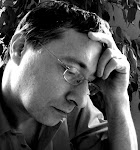
Yesterday I had the pleasure of spending the evening with the Grace Dieu Writers’ Circle in Coalville. They are enthusiastic, well organised and a joy to be with. I was supposed to be there as a tutor, leading a writing workshop, but as is usual with these events, I ended up learning a load of stuff myself.
When I am writing, I try to put myself into the scene. In other words, I imagine I am there, standing in the place the protagonist is standing, feeling what they are feeling. When the protagonist moves, I sometimes find myself acting out the movement – perhaps reaching my hand as if I was going to pick something up. When in this state – really in the scene – I find the words come naturally and the writing tends to be more vivid. If I feel the things the protagonist is feeling, hopefully my readers will too.
The thought that came to me yesterday, when preparing the workshop, was that perhaps I am doing this because I don’t have a very visual mind. I do find it difficult to picture scenes in my head. Therefore I place myself inside the scene, relying more on tactile and emotional senses than visual ones. Could it be that other writers are so visually able that they are seeing the scenes they describe from the outside – watching it on the cinema screen of their minds?
And then comes the follow-up question. It is a thought experiment. If two writers, similar in most respects, were to describe the same scene, but one imagined herself in it and the other imagined viewing it from outside, would the two descriptions feel different? Or perhaps it would be more helpful to ask whether the writing of people who habitually place themselves inside scenes will have noticeable differences from the writing of people who habitually look in on scenes from outside.
Any thoughts on this would be warmly welcomed.
Friday, June 15, 2007
Thursday, May 31, 2007
Pirates of the Caribbean - at world's end
If someone tells me there’s going to be a firework display just down the road and that the organisers have blown $200 million on the thing, I’m definitely going to go along and have a look. With that philosophy in mind I went with the family to see the third Pirates of the Caribbean movie – At World’s End.
We sat there dazed by moments of brilliance from the legions special effects teams, stunt performers, martial arts choreographers, set designers, and actors. I couldn’t see anything wrong with the little bits that made up the film. But saying that is as meaningless as admiring all the individual pieces of a jigsaw puzzle. The question is, did it work as a whole?
When I walked out of the cinema some three hours later, I found myself relieved that it was over.
‘That was kind of fun,’ someone said, ‘but there wasn’t really a story.’
I begged to differ. There was too much story – none of which I found myself caring about. Every character was double-crossing everyone else. No one said or showed what they really felt. None of the many heroes of the film had a discernable inner journey. Sure they were in danger. But did I or any of the other members of the audience really give a damn? We were just waiting for more explosions and cameo performances.
The next day, my daughter, as keen a Pirates of the Caribbean fan as ever you are likely to meet, confessed to me that she couldn’t really remember any of the scenes. But it was fun, she said. And that about sums it up for me. If movies were only measured by the weight of gunpowder ignited, this would be a classic.
We sat there dazed by moments of brilliance from the legions special effects teams, stunt performers, martial arts choreographers, set designers, and actors. I couldn’t see anything wrong with the little bits that made up the film. But saying that is as meaningless as admiring all the individual pieces of a jigsaw puzzle. The question is, did it work as a whole?
When I walked out of the cinema some three hours later, I found myself relieved that it was over.
‘That was kind of fun,’ someone said, ‘but there wasn’t really a story.’
I begged to differ. There was too much story – none of which I found myself caring about. Every character was double-crossing everyone else. No one said or showed what they really felt. None of the many heroes of the film had a discernable inner journey. Sure they were in danger. But did I or any of the other members of the audience really give a damn? We were just waiting for more explosions and cameo performances.
The next day, my daughter, as keen a Pirates of the Caribbean fan as ever you are likely to meet, confessed to me that she couldn’t really remember any of the scenes. But it was fun, she said. And that about sums it up for me. If movies were only measured by the weight of gunpowder ignited, this would be a classic.
Wednesday, May 30, 2007
The Dyslexia Debate Rumbles on
When a story leaps into the news without any obvious event to kick it off, one has to ask the question - who has been working so very hard behind the scenes to put it there? So it is with the recent dyslexia debate. The shocking story has slammed into the news, again, that some people believe dyslexia is a myth.
I'm sorry? Did I miss something? How did this story get taken up? I know it came just after a bank holiday, but was it really THAT quiet a news day? Someone must have been sending out reams of press releases and talking to influential friends in the media.
Taking a wild guess, I'd say that the way the Special Educational Needs budget is divided up could a motivating factor. Not that I'm any fan of conspiracy theories.
On the other hand, how to teach children to read and write is a good question for debate. How the resources are divided up is important. For myself, I am sceptical of one-size-fits-all teaching methods. But that's just me. I'd only point out that the history of educational theory is littered with discarded methods that were once going to banish illiteracy forever.
I'm more concerned that in this narrow debate, the general public might become confused about the obvious and undeniable truth - there were dyslexics around long before writing was invented. And dyslexia isn't 'cured' once a student has achieved a 'C' grade or above in their GCSE English exam. It is a life-long condition, a difference in the hard wiring of the brain that conveys some advantages as well as disadvantages.
Please, let's not lose sight of that.
I'm sorry? Did I miss something? How did this story get taken up? I know it came just after a bank holiday, but was it really THAT quiet a news day? Someone must have been sending out reams of press releases and talking to influential friends in the media.
Taking a wild guess, I'd say that the way the Special Educational Needs budget is divided up could a motivating factor. Not that I'm any fan of conspiracy theories.
On the other hand, how to teach children to read and write is a good question for debate. How the resources are divided up is important. For myself, I am sceptical of one-size-fits-all teaching methods. But that's just me. I'd only point out that the history of educational theory is littered with discarded methods that were once going to banish illiteracy forever.
I'm more concerned that in this narrow debate, the general public might become confused about the obvious and undeniable truth - there were dyslexics around long before writing was invented. And dyslexia isn't 'cured' once a student has achieved a 'C' grade or above in their GCSE English exam. It is a life-long condition, a difference in the hard wiring of the brain that conveys some advantages as well as disadvantages.
Please, let's not lose sight of that.
Saturday, May 12, 2007
Not Blogging but Teaching
Instead of writing a blog entry this time, I thought I'd try a video podcast. This was supposed to save time. Ha! It took me far longer - and now I am writing a blog entry as well to explain myself.
If you are having trouble viewing the above video, you could try watching it at YouTube
If you are having trouble viewing the above video, you could try watching it at YouTube
Wednesday, April 25, 2007
Real life and blogging
The ironic thing about keeping a blog is that the more stuff there is actually happening in one's life, the less time there is left to write about it. And so it is with me at the moment. I am teaching three writing courses in different places and am busy working on three different pieces of writing (more of those in a later posting).
I've also had the pleasure of visiting several readers' groups recently as part of the Writers2Readers project. The project has taken me to various venues around the East Midlands (including a room above a bar where the lighting was low, the heating was high and my audience did extremely well to stay awake - thank you all for that:-)
But please keep looking in on the blog, as new entries will be following soon.
I've also had the pleasure of visiting several readers' groups recently as part of the Writers2Readers project. The project has taken me to various venues around the East Midlands (including a room above a bar where the lighting was low, the heating was high and my audience did extremely well to stay awake - thank you all for that:-)
But please keep looking in on the blog, as new entries will be following soon.
Tuesday, April 03, 2007
Hot Fuzz
What happens when a pumped-up urban uber-cop is relocated to a sleepy rural village with a zero crime rate? The answer is the distinctly British crime comedy, Hot Fuzz. No other country could have given birth to a movie like this. Will audiences in any other country understand it? Do the producers even care? They’ve made a movie that is true to itself and its origins and been rewarded with a huge domestic commercial success.
I’m lucky enough to be able to go to the movies in the early afternoon on weekdays when the theatres are largely empty. Viewing Hot Fuzz with me in the Leicester Odeon were two elderly couples. Unlike me, they didn’t seem to notice that low notes were causing the speaker system to rattle like a china shop in a small earthquake. To be fair the manager eventually offered me a couple of free tickets in compensation, but only after I’d talker my way past a couple his rather defensive staff members.
Notwithstanding the situation, I found plenty of laugh-out loud moments and was grinning through a good part of the rest of the movie. The slapstick nature of a lot of the gags did make it hard to get emotionally involved with the story and two hours was starting to feel like a long haul on the jokes alone. But who knows, given a working speaker system and a load of people around me laughing, I might not have noticed. The editing is certainly tight through out. I only wish that during the final fight sequence in the model village, one of the characters had said, ‘This town ain’t big enough for the both of us.’
I’m lucky enough to be able to go to the movies in the early afternoon on weekdays when the theatres are largely empty. Viewing Hot Fuzz with me in the Leicester Odeon were two elderly couples. Unlike me, they didn’t seem to notice that low notes were causing the speaker system to rattle like a china shop in a small earthquake. To be fair the manager eventually offered me a couple of free tickets in compensation, but only after I’d talker my way past a couple his rather defensive staff members.
Notwithstanding the situation, I found plenty of laugh-out loud moments and was grinning through a good part of the rest of the movie. The slapstick nature of a lot of the gags did make it hard to get emotionally involved with the story and two hours was starting to feel like a long haul on the jokes alone. But who knows, given a working speaker system and a load of people around me laughing, I might not have noticed. The editing is certainly tight through out. I only wish that during the final fight sequence in the model village, one of the characters had said, ‘This town ain’t big enough for the both of us.’
Saturday, March 24, 2007
Why are movies so expensive to make?
Last year I decided I didn't know enough about the movie industry, so I signed up for a course in film making with Line Out in Leicester. We learned about lighting and sound and cameras and scene structure and how movies are put together. But the highlight of the course was the final weekend when we went out to make our own five minute movie.
Five minutes is a difficult length to write a story for. It is too long for a single punchline gag and too short to easily develop characters and relationships that the audience will want to follow. With those limitations in mind, I set out to write a five page screenplay. I was delighted when my story, Pictures of Andy, was selected for production.
 Then came the filming weekend. Such an exhausting two days of sweat and effort! But the production team, including Gav, Bav and Alex (I'll write more about them in a later post) was excellent. The actors, including Haresh Sood and Claudia Wilson were superb. All the days of writing, storyboarding and planning bore fruit. When we sat down for our final 2 days of work on the film - in the editing suite - we were amazed to see the result taking shape.
 All that for five minutes of film? Now I start to understand why movies are so expensive to make. But was it worth it? All I can say is, I can't wait to do it again.
Our film, Pictures of Andy, has just been put up on YouTube. Unfortunately our attractive widescreen format film has been squashed to get it to fit YouTube. But it will give you an idea of what we were doing.
Five minutes is a difficult length to write a story for. It is too long for a single punchline gag and too short to easily develop characters and relationships that the audience will want to follow. With those limitations in mind, I set out to write a five page screenplay. I was delighted when my story, Pictures of Andy, was selected for production.
Then came the filming weekend. Such an exhausting two days of sweat and effort! But the production team, including Gav, Bav and Alex (I'll write more about them in a later post) was excellent. The actors, including Haresh Sood and Claudia Wilson were superb. All the days of writing, storyboarding and planning bore fruit. When we sat down for our final 2 days of work on the film - in the editing suite - we were amazed to see the result taking shape. All that for five minutes of film? Now I start to understand why movies are so expensive to make. But was it worth it? All I can say is, I can't wait to do it again.Our film, Pictures of Andy, has just been put up on YouTube. Unfortunately our attractive widescreen format film has been squashed to get it to fit YouTube. But it will give you an idea of what we were doing.
Friday, March 16, 2007
No Star on the Door
Last night I had the hugely enjoyable experience of visiting Derby's Guildhall theatre, seeing Michael Marshall talk and read from his soon to be published novel, and performing the story Blood Mother, alongside Clare Littleford and Sally Spedding.
I've lost count of the number of venues where I've given readings, talks or storytelling performances. Usually they are libraries or community centres or village halls. Each has been enjoyable in its own way - for me, at least. But last night was the first time in a good few years that I've had the pleasure of performing in a real theatre, complete with black drapes, stage lighting and a dressing room. (I can report that there were no stars on the dressing room door.)
And Michael's reading was spellbinding. I don't want to spoil it for anyone so I can't say much - except that it was a masterclass in pace and impact.
I've lost count of the number of venues where I've given readings, talks or storytelling performances. Usually they are libraries or community centres or village halls. Each has been enjoyable in its own way - for me, at least. But last night was the first time in a good few years that I've had the pleasure of performing in a real theatre, complete with black drapes, stage lighting and a dressing room. (I can report that there were no stars on the dressing room door.)
And Michael's reading was spellbinding. I don't want to spoil it for anyone so I can't say much - except that it was a masterclass in pace and impact.
Wednesday, March 07, 2007
Virtual spring cleaning
It is spring - according to the flowers and animals in the garden. No use telling them to hold back till March 21st - the official first day of spring. What better time of year to clear out the clutter with a physical, spiritual and virtual spring clean?
My physical spring clean has been hauling barrow loads of stuff (stuff that I can't compost) from the back of the garden to a skip at the front of the house. The spiritual spring clean is the Baha'i fast (a period of nineteen days leading up to the Baha'i new year, March 21st). And then to the real subject of this posting - the virtual spring clean - which has been a re-design of my website.
My physical spring clean has been hauling barrow loads of stuff (stuff that I can't compost) from the back of the garden to a skip at the front of the house. The spiritual spring clean is the Baha'i fast (a period of nineteen days leading up to the Baha'i new year, March 21st). And then to the real subject of this posting - the virtual spring clean - which has been a re-design of my website.
Please do visit it and let me know how it looks on your computer. The input would be much appreciated.
Monday, February 26, 2007
Are you a character in someone else's fiction?
Following a number of discussions on fiction, metafiction and films such as Stranger Than Fiction, Annie Hall etc, I thought it might be useful to provide the following practical checklist. If you suspect you may be a character in someone else’s novel or movie, here are a few signs to look out for:
If you are able to find a parking space outside any building you happen to want to visit, you are certainly in a movie not in real life.
Similarly, if you book into a cheap hotel room in Paris and find your window looks out on the Eiffel Tower.
If every time you turn the TV on it happens to be a news bulletin on an issue directly relevant to your present situation, then you are definitely in a work of fiction.
If you are still in doubt you could always try this: go into the city centre and start dancing. If everyone you bump into knows the steps to your dance, you are definitely in a movie.
Sunday, February 18, 2007
Stranger than Fiction
Characters in novels do sometimes come to life. Like in the novel Breakbeat – where I put my main character in an argument with a woman from the Social Security, and was surprised when, at the end of the conversation, he invited her out on a date. They both wanted it, so I let them. Other times I have to keep my characters more tightly under control. I have occasionally spared them some ordeal, feeling they have suffered enough already. But I have never believed they were real.
In the film Stranger than Fiction, however, they really are. It is a delicious ‘what if’ story. What if someone woke up one day and found a narrator in his head? What if the plot choices of a reclusive novelist were being played out in real people’s lives?
Will Ferell plays a man who thinks he is in control of his admittedly narrow life. He counts the strokes of his toothbrush. He counts the number of paces to the bus stop. But when the voice of Emma Thompson comes into his head one day, narrating the things he is doing and is about to do, he starts to suspect that his future is being written.
With metafiction – stories in which storytelling itself is in some way the subject – one is never quite sure whether any shortcomings are in fact ironic statements by the writer. In Stranger than Fiction, the clichés and quirks of Emma Thompson’s narration are surely intended in this way, and added greatly to my enjoyment. I would have liked to think the unbelievably two-dimensional character of the author’s assistant, played by Queen Latifa, was another ironic statement. Unfortunately that one was just a mistake. There was nothing wrong with her acting, but the character was so obviously a device to give the novelist someone to talk to that she became unbelievable.
However, that is a small complaint about an otherwise eminently watchable, well acted and cleverly constructed romantic comedy which has plenty of laugh out loud moments along the way, especially for those who enjoy reading (and /or writing) novels.
In the film Stranger than Fiction, however, they really are. It is a delicious ‘what if’ story. What if someone woke up one day and found a narrator in his head? What if the plot choices of a reclusive novelist were being played out in real people’s lives?
Will Ferell plays a man who thinks he is in control of his admittedly narrow life. He counts the strokes of his toothbrush. He counts the number of paces to the bus stop. But when the voice of Emma Thompson comes into his head one day, narrating the things he is doing and is about to do, he starts to suspect that his future is being written.
With metafiction – stories in which storytelling itself is in some way the subject – one is never quite sure whether any shortcomings are in fact ironic statements by the writer. In Stranger than Fiction, the clichés and quirks of Emma Thompson’s narration are surely intended in this way, and added greatly to my enjoyment. I would have liked to think the unbelievably two-dimensional character of the author’s assistant, played by Queen Latifa, was another ironic statement. Unfortunately that one was just a mistake. There was nothing wrong with her acting, but the character was so obviously a device to give the novelist someone to talk to that she became unbelievable.
However, that is a small complaint about an otherwise eminently watchable, well acted and cleverly constructed romantic comedy which has plenty of laugh out loud moments along the way, especially for those who enjoy reading (and /or writing) novels.
Wednesday, February 14, 2007
Story Structure - Getting to the end
I’ve heard it said that Sue Grafton describes the process of writing a novel as being like driving through fog. You can see the road for a little way in front of you but the horizon in obscure. Other novelists speak about the process of planning out a novel in great detail before setting out on chapter one. It has been years since I read it, but I believe R. F. Keating describes this method in his book on how to write a crime novel. For me, the experience is somewhere in between. I know where I am going, but the landscape I’m going to pass through on the way will be a surprise to me. (Hopefully a pleasant surprise.)
I’m presently coming to the end of writing something and last week I had the magical experience of understanding how to get from where I am to the climax of the story. I perceived a pattern in what had previously been a complex jumble of information and story threads. Suddenly the chaos resolved into a single picture. I walked round the house smiling like a Cheshire cat looking for long-suffering family members to tell.
But there is one bit of a story that I never know before I get to it. That is the last little bit – after the climax but before the words ‘The End’. The crime may be solved. The action may be over. But in my stories that last chapter often contains the real payoff – the emotional resolution. I may guess what it will be, but I can’t be sure until all the rest of the book is written.
I’m presently coming to the end of writing something and last week I had the magical experience of understanding how to get from where I am to the climax of the story. I perceived a pattern in what had previously been a complex jumble of information and story threads. Suddenly the chaos resolved into a single picture. I walked round the house smiling like a Cheshire cat looking for long-suffering family members to tell.
But there is one bit of a story that I never know before I get to it. That is the last little bit – after the climax but before the words ‘The End’. The crime may be solved. The action may be over. But in my stories that last chapter often contains the real payoff – the emotional resolution. I may guess what it will be, but I can’t be sure until all the rest of the book is written.
Wednesday, February 07, 2007
Runequest and team writing
Thank you, Geraint, for your comment on my last posting Don't Judge a Book by its Cover.
But perhaps I should explain for those who don't know (the population of the world minus three). When I was 18, I spent the summer holidays with a schoolfriend, Paul, planning out a comedy fantasy novel called Runequest. Geraint, another schoolfriend, came to join us for a number of those writing sessions.
I don't know if anyone else would have found our story funny. All I can say is, I had never laughed as much before, and have seldom since. It was my first experience of writing a story for my own pleasure. It was wonderful.
Then, of course, this man called Pratchett (you may have heard of him) came along and cornered the market in fantasy take-off novels. We all went off in different directions and our Runequest story never saw the light of day. I believe Paul still has the folder containing the plan. Looking back on it, and having gone through the novel writing process a few times now, I'd say our plan had enough material for a 5 book series.
Perhaps there is something particularly pleasurable about team writing. Every time I have done it since, it has been a huge pleasure. So far the only bits of that work that have come to fruition are the performance stories Hazard Warning and Blood Mother, written with Clare Littleford and Sally Spedding. The next performance of Blood Mother will be in the Derby Guildhall on March 15th 2007.
But perhaps I should explain for those who don't know (the population of the world minus three). When I was 18, I spent the summer holidays with a schoolfriend, Paul, planning out a comedy fantasy novel called Runequest. Geraint, another schoolfriend, came to join us for a number of those writing sessions.
I don't know if anyone else would have found our story funny. All I can say is, I had never laughed as much before, and have seldom since. It was my first experience of writing a story for my own pleasure. It was wonderful.
Then, of course, this man called Pratchett (you may have heard of him) came along and cornered the market in fantasy take-off novels. We all went off in different directions and our Runequest story never saw the light of day. I believe Paul still has the folder containing the plan. Looking back on it, and having gone through the novel writing process a few times now, I'd say our plan had enough material for a 5 book series.
Perhaps there is something particularly pleasurable about team writing. Every time I have done it since, it has been a huge pleasure. So far the only bits of that work that have come to fruition are the performance stories Hazard Warning and Blood Mother, written with Clare Littleford and Sally Spedding. The next performance of Blood Mother will be in the Derby Guildhall on March 15th 2007.
Sunday, February 04, 2007
Don't judge a book...
Don’t Judge a Book by its Cover. But don’t we do exactly that? The title, the cover image and the blurb make some kind of impression that get us to put the book back on the shelf or open it up and start reading.
All of which makes my present dilemma more difficult. There is a story that has been tumbling round in my head for some time. Now I have started to write it and, for various reasons, I need to come up with a title. I’ve grown quite fond of this story, and so I want a really good title to go along with it. That puts the pressure on. Ho-hum. I’m just going to have to choose one and hope. I'll let you know when I have it settled.
Perhaps I should have done it the other way around – devised a drop-dead brilliant title, then imagined a cover and a blurb to go with it, and finally got round to thinking up the story.
All of which makes my present dilemma more difficult. There is a story that has been tumbling round in my head for some time. Now I have started to write it and, for various reasons, I need to come up with a title. I’ve grown quite fond of this story, and so I want a really good title to go along with it. That puts the pressure on. Ho-hum. I’m just going to have to choose one and hope. I'll let you know when I have it settled.
Perhaps I should have done it the other way around – devised a drop-dead brilliant title, then imagined a cover and a blurb to go with it, and finally got round to thinking up the story.
Subscribe to:
Posts (Atom)