Could the non-dyslexic condition be likened to a drop of rain that falls on a wide low valley? However far from the centre it may land, the gentle pull of gravity will attract it towards the middle.
The dyslexic condition by contrast could be seen as a drop of rain that falls on a high ridge of land. Despite the natural psychological tendency for people to want to conform to the ways of society, and however average the starting point, dyslexics find themselves pushed, as if by some strange gravity, away from the middle, towards conspicuous achievement to one side or hopeless failure on the other.
It has been said that people can be divided into two types: those who divide people into two types and those who don’t. A joke that pokes fun at any such simple division. Life can’t be so simple.
And yet, consider these two statistics:
1) The proportion of the prison population in the UK who are dyslexic is far higher than the proportion of the general population who are dyslexic. In other words, something is making it more likely for dyslexics to end up in prison than non-dyslexics.
2) The proportion of entrepreneurial business leaders who are dyslexic is far higher than the proportion of dyslexics in the general population. In other words, something is making it more likely for dyslexics to become successful entrepreneurs.
What condition could predispose people to two such opposite outcomes? A condition that makes it hard for the individual to function in the same way as the bulk of society.
The experience of being dyslexic in a non-dyslexic world is like being constantly out of step. You can see everyone else is marching in time. You desperately want to do the same. But it takes such effort that you quickly fall out of step again.
You have two options:
1) Give up.
2) Try to find a solution.
Finding a solution is something that no one can teach you. Most people are not even aware that there is anything to be taught. If you’re not marching in step you must be lazy, careless or just bad.
The PE teacher shouts to the class. Everyone put your right foot forward and your left foot back. The dyslexic kid gets it wrong. Again. Hasn’t he been listening? Are you lazy? Careless? Obstructive? Are you deaf? The child is concentrating hard, trying to figure out a method for remembering the names to these two sides. The teacher couldn’t teach a method, even if he recognised the problem. The teacher doesn’t have a method to remember left from right. He doesn’t need one.
Nor do any of the others in the class.
The life of a dyslexic is full of such challenges. Finding answers to problems that aren’t problems to anyone else. Learning to battle, to try harder, to mistrust the way things have always been done, to always look beyond the obvious, to find a new path that no one else has seen.
Or to not find a path. That is the other possibility. To accept the labels that the PE teacher shouts. Daydreaming, careless, obstructive or just plane bad. After all, these labels do offer an explanation. Which is easier to say: “I didn’t do my homework because it was too difficult”, or “I didn’t do my homework coz I just didn’t, coz I’m the bad boy of the class”?
Take a bright child into nursery at age 4. Give him tasks he can’t do five days a week. Every day tell him he’s daydreaming or being obstructive. Tell him he’s bad. How many years will he hold out before figuring it’s easier to be what the teacher thinks he is? How many years could you hold out?
There is a psychological experiment in which two groups of people are given three anagrams to solve. Group ‘A’ have an easy one to solve first and a harder one to solve second. Group ‘B’ have two impossible anagrams. For the third anagram, both groups are given the same. It is moderately difficult. Almost all of group ‘A’ manage to solve it. The first two puzzles taught them to expect success. Almost none of group ‘B’ manage to do it. They have been taught to expect failure.
If such patterns can be set up in adults in a few minutes, what will be the effect of 12 years in the school system?
Tuesday, November 30, 2010
Friday, November 26, 2010
Smatrphones, unfriendly lists and geographical order
How should I organise my DVD collection? By title? By director? By genre, date or lead actor? Or should I carry on with my present approach - periodically scooping up the DVDs that have accumulated on the floor next to the television and shovelling them onto a nearby shelf?
The same question presents itself when people try to organise papers in an office or products in a supermarket. Specialists in organisation have devised many different systems. However, there is no one-size-fits-all answer, as the system which works best will depend on the individual using it. An excellent book on the subject is ‘A Perfect Mess – the hidden benefits of disorder.’ Highly recommended.
The question is of particular interest to me because, like many dyslexics, my creative, chaotic mind and my tendency to live in the moment lead to a level of chaos that some might find distressing. People of a delicate disposition on entering my office are likely to throw their hands in the air and cry: ‘You’ve been burgled. I’ll phone the police.’
Happily technology is helping with this. The computer allows me to change the way my files are sorted with the click of a button. Alphabetical, by date of creation, by file type, by size. This suits me well, bringing my creative chaos back towards the zone I like to call ‘functional disorder’ (as opposed to ‘dysfunctional disorder’ or ‘dysfunctional order’.) I keep my work space as paperless as possible. A decent shredder helps.
Those who follow this blog will know that a few months ago I bought a Dell Streak smartphone, hoping thereby to drive myself towards a higher level of functionality. I’m happy to report that my experience with it has been excellent so far, helping me deal more efficiently with dates, times, communications and places.
But it is the last of these that has been the revelation. Places. Smartphones are data access / data collection devices. Through GPS they know where they are to within a few metres anywhere on the planet. And the number of people carrying them is rocketing. Put those facts together and a future opens up before us in which location is increasingly used as a means of organising and retrieving information. And THAT is an exciting prospect. For me, anyway. It matches the way my mind works. Data scattered across a map is infinitely more friendly to me than data neatly arranged in a list.
I hope we are on the brink of a more dyslexic-friendly future.

The same question presents itself when people try to organise papers in an office or products in a supermarket. Specialists in organisation have devised many different systems. However, there is no one-size-fits-all answer, as the system which works best will depend on the individual using it. An excellent book on the subject is ‘A Perfect Mess – the hidden benefits of disorder.’ Highly recommended.
The question is of particular interest to me because, like many dyslexics, my creative, chaotic mind and my tendency to live in the moment lead to a level of chaos that some might find distressing. People of a delicate disposition on entering my office are likely to throw their hands in the air and cry: ‘You’ve been burgled. I’ll phone the police.’
Happily technology is helping with this. The computer allows me to change the way my files are sorted with the click of a button. Alphabetical, by date of creation, by file type, by size. This suits me well, bringing my creative chaos back towards the zone I like to call ‘functional disorder’ (as opposed to ‘dysfunctional disorder’ or ‘dysfunctional order’.) I keep my work space as paperless as possible. A decent shredder helps.
Those who follow this blog will know that a few months ago I bought a Dell Streak smartphone, hoping thereby to drive myself towards a higher level of functionality. I’m happy to report that my experience with it has been excellent so far, helping me deal more efficiently with dates, times, communications and places.
But it is the last of these that has been the revelation. Places. Smartphones are data access / data collection devices. Through GPS they know where they are to within a few metres anywhere on the planet. And the number of people carrying them is rocketing. Put those facts together and a future opens up before us in which location is increasingly used as a means of organising and retrieving information. And THAT is an exciting prospect. For me, anyway. It matches the way my mind works. Data scattered across a map is infinitely more friendly to me than data neatly arranged in a list.
I hope we are on the brink of a more dyslexic-friendly future.

Thursday, November 25, 2010
Eddie Izzard speaks about dyslexia and creativity
The following interview of Eddie Izzard by Mark Lawson on BBC Radio 4’s ‘Front Row’ touches on the relationship between dyslexia and creativity. The link is here, but I don’t know how long it will remain live, so I have made a rough transcription of the relevant part.
Eddie Izzard: I couldn’t do that writing bit. I kept trying to do the writing bit and sitting down and it wouldn’t come out. I couldn’t seem to write as fast as... My mouth was faster than my hand. So I said, what - happens - when... if - chickens - take - over - the - world, what - would - they... you know, and by that time, I don’t care.
Mark Lawson: There have been suggestions of a link between dyslexia and surrealism and some people have suggested that poets may be on the spectrum of dyslexia because they go for one word and get another. But there is possibly a connection in your comedy.
Eddie Izzard: I felt there’s a relationship between dyslexia and creativity. I believe that dyslexia tends to make you go off in a weird direction. And then you go: ‘Oh, that’s nice’. And that could well lead to that. And it’s interesting you saying about poets. I didn’t know about that. But I just thought creativity in general and dyslexia.
Mark Lawson: The learning of scripts, does that affect you?
Eddie Izzard: It doesn’t seem to. If I read things now, I can read better than I could. I used to really stumble over words. Big words. Especially names of people from a foreign country. I’d just go blah-blah-blah in my head. That’s how I’d read them out. Now I can read them. I’m just a really slow reader.
They say: ‘Read that script by tonight.’ People would knock it off in an hour or so if they’re probably a fast reader. But I have to stay up to three or four in the morning reading it. It just takes me twice, three times as long.
I sub-vocalise. I can’t do that thing when you ‘wshhhhhhhhht’ which some people do. I’d love to be able to. I’ve even got a speed reading book but, I... couldn’t get through it. Which is a joke in itself. But it was actually true. I got the speed reading book and I read half of it.
This is just an extract from a fascinating interview.
Eddie Izzard: I couldn’t do that writing bit. I kept trying to do the writing bit and sitting down and it wouldn’t come out. I couldn’t seem to write as fast as... My mouth was faster than my hand. So I said, what - happens - when... if - chickens - take - over - the - world, what - would - they... you know, and by that time, I don’t care.
Mark Lawson: There have been suggestions of a link between dyslexia and surrealism and some people have suggested that poets may be on the spectrum of dyslexia because they go for one word and get another. But there is possibly a connection in your comedy.
Eddie Izzard: I felt there’s a relationship between dyslexia and creativity. I believe that dyslexia tends to make you go off in a weird direction. And then you go: ‘Oh, that’s nice’. And that could well lead to that. And it’s interesting you saying about poets. I didn’t know about that. But I just thought creativity in general and dyslexia.
Mark Lawson: The learning of scripts, does that affect you?
Eddie Izzard: It doesn’t seem to. If I read things now, I can read better than I could. I used to really stumble over words. Big words. Especially names of people from a foreign country. I’d just go blah-blah-blah in my head. That’s how I’d read them out. Now I can read them. I’m just a really slow reader.
They say: ‘Read that script by tonight.’ People would knock it off in an hour or so if they’re probably a fast reader. But I have to stay up to three or four in the morning reading it. It just takes me twice, three times as long.
I sub-vocalise. I can’t do that thing when you ‘wshhhhhhhhht’ which some people do. I’d love to be able to. I’ve even got a speed reading book but, I... couldn’t get through it. Which is a joke in itself. But it was actually true. I got the speed reading book and I read half of it.
This is just an extract from a fascinating interview.
Sunday, November 14, 2010
Dyslexic spelling from a 12 year old
I've turned up another example of dyslexic spelling. This time by a 12 year old. (Me again.) This one, which I found even deeper into the dust at the back of the shelf, came from a history project on Tudor England. And though you may have thought my spelling was singular at 13, this example from the year before is even more interesting.
It seems that I wasn't holding back so much in this work because I attempted words I had little idea of how to spell. The content of the writing is thus more interesting and the spelling more inventive.
This was my best work at the time.
The Sival War
In 1650 King-charls I was running in to det. So he whent to parlament to asck for mony Thay sead no so he brought some solders in to fors Them. but thay had herd abowt the atack and had escaped by bote so the sival war started.
One day the vilage was on one side and the next it was on the other. The vilagers did not like the ware and preferd to stay ought of it.
Parlimant's side was called the round heds the kings side was called the Cavalears. There was two mager batals. The batal of Marson Moor and the batal of Edgehill. The Roundheds worn the first and the cings men won the secand. Parlament wone the sivel war and Oliva cromwell was made leader of the country.

It seems that I wasn't holding back so much in this work because I attempted words I had little idea of how to spell. The content of the writing is thus more interesting and the spelling more inventive.
This was my best work at the time.
The Sival War
In 1650 King-charls I was running in to det. So he whent to parlament to asck for mony Thay sead no so he brought some solders in to fors Them. but thay had herd abowt the atack and had escaped by bote so the sival war started.
One day the vilage was on one side and the next it was on the other. The vilagers did not like the ware and preferd to stay ought of it.
Parlimant's side was called the round heds the kings side was called the Cavalears. There was two mager batals. The batal of Marson Moor and the batal of Edgehill. The Roundheds worn the first and the cings men won the secand. Parlament wone the sivel war and Oliva cromwell was made leader of the country.

Thursday, November 11, 2010
Dyslexic spelling
The following example of dyslexic spelling turned up today as I was moving office. At the back of a deep shelf, I discovered a long forgotten box of school books, including the diary I had once been required to write. I believe the school's idea was that writing an entry a day would gradually help me to overcome my problems.
Reading it now, I'm struck by three things. First, that in recording the events of my life, I could only write about things I had a chance of being able to spell. Second, that even after slimming down my language and carefully choosing the subject, there was no way through the writing maze without having to make frequent spelling guesses. And third, that my teachers were kind enough to only correct one or two words in each entry.
So here, chosen at random, are three days worth of diary from a 13 year old dyslexic, who bizarrely went on to become a novelist.
Yesterday in gaims I had a tutorial it was good fun. We did some spelling ruls. In the evening I was playing a gaim called T.R.I Tactics. It was fun. Yong siantist and mishon imposable were on telivition.
Yesterday we had an English test it was grosum. I did farly well. Also yesterday we went on a run. we were not timed so we could Just trot round. In the evening we went swiming it was a practis for the swiming gala.
To day in the morning in english we did a leson on wrighting informal leters. After that in gography we starled maps of the Mendips.
Comments are as always welcome. But please don't correct the spelling. Having mistakes pointed out gets tiresome after the first thirty or forty years.

Reading it now, I'm struck by three things. First, that in recording the events of my life, I could only write about things I had a chance of being able to spell. Second, that even after slimming down my language and carefully choosing the subject, there was no way through the writing maze without having to make frequent spelling guesses. And third, that my teachers were kind enough to only correct one or two words in each entry.
So here, chosen at random, are three days worth of diary from a 13 year old dyslexic, who bizarrely went on to become a novelist.
Yesterday in gaims I had a tutorial it was good fun. We did some spelling ruls. In the evening I was playing a gaim called T.R.I Tactics. It was fun. Yong siantist and mishon imposable were on telivition.
Yesterday we had an English test it was grosum. I did farly well. Also yesterday we went on a run. we were not timed so we could Just trot round. In the evening we went swiming it was a practis for the swiming gala.
To day in the morning in english we did a leson on wrighting informal leters. After that in gography we starled maps of the Mendips.
Comments are as always welcome. But please don't correct the spelling. Having mistakes pointed out gets tiresome after the first thirty or forty years.

Friday, October 15, 2010
#GMP24 twitter feed for crime writers
This is just a quick entry to point any crime writers who follow my blog in the direction of the Twitter feeds GMP24_1 GMP24_2 GMP24_3 and GMP24_4
GMP stands for Greater Manchester Police. The 24 is a reference to the fact that they were putting out a Tweet for every incident they dealt with over a 24 hour period. The 4 different feeds are due to the fact that the Tweeting had to be done in shifts, so thick and fast did the incidents happen.
The resultant feed is fabulous source material for crime writers. Or poets. Or any writer for that matter. Go see.
And here is a really interesting article from the BBC news website on the whole event. I've borrowed their graphic of a tag cloud of the stream because it is so good - and am putting this link in by way of thanks.

Thank you BBC and GMP.
GMP stands for Greater Manchester Police. The 24 is a reference to the fact that they were putting out a Tweet for every incident they dealt with over a 24 hour period. The 4 different feeds are due to the fact that the Tweeting had to be done in shifts, so thick and fast did the incidents happen.
The resultant feed is fabulous source material for crime writers. Or poets. Or any writer for that matter. Go see.
And here is a really interesting article from the BBC news website on the whole event. I've borrowed their graphic of a tag cloud of the stream because it is so good - and am putting this link in by way of thanks.

Thank you BBC and GMP.
MuBu: the Newark Houses Museum
Miles Travelled = 124.7
Museums Visited = 4
Mood = Slightly Embarrassed
The Newark Houses Museum is a last minute call. They’re having a MuBu project event. Something to do with videos. Would I be free to go along?
So, innocent of any knowledge about the project, or indeed the place, I hurry into Leicester, find the museum and present myself at reception.
It is at this point that I need to make another confession...
Read the complete article at the MuBu Writer in Residence website.

Museums Visited = 4
Mood = Slightly Embarrassed
The Newark Houses Museum is a last minute call. They’re having a MuBu project event. Something to do with videos. Would I be free to go along?
So, innocent of any knowledge about the project, or indeed the place, I hurry into Leicester, find the museum and present myself at reception.
It is at this point that I need to make another confession...
Read the complete article at the MuBu Writer in Residence website.

Monday, October 11, 2010
EDL demonstration and One Leicester celebrations
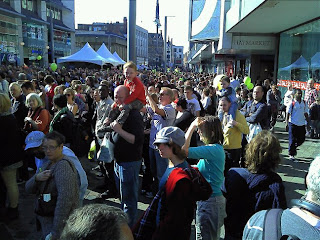
Two days ago, a group called the EDL came to leicester and staged a violent demonstration regarded by most external observers as anti-Muslim. Yesterday the people of Leicester responded with a celebration of unity in diversity. It may not surprise you to learn that the two events were not reported in the same way.
The following is the text of a letter of complaint I am sending to the BBC:
A news organization has a responsibility to report political issues in an even-handed way. Thus a statement from a spokesperson of one party is typically followed by an answering statement from the others.
So where was the balance last weekend in the BBC’s reporting of events in Leicester? The EDL had arranged a demonstration for Saturday, viewed by many as anti-Muslim. The City Council urged those people in Leicester who wished to present an opposing view to avoid direct confrontation, but instead to come into the city on the following day and demonstrate the fact that we as a city embrace and celebrate our religious and ethnic diversity.
The BBC, along with other news organizations, turned up and covered the EDL demonstrations. But what national news coverage did the city’s response to the EDL receive? I searched in vain for any coverage of Sunday’s huge celebration – which frankly dwarfed the EDL’s event.
How can the BBC justify such bias in its coverage of a political issue? The coverage is not just misrepresentative, it is also in itself damaging. At the very least, equal time should have been given to the city’s response.
If your answer is that the events on Sunday were not reported because there was no street violence, then you are telling the world that violence is an effective means of getting a message heard. Should that be the message of the BBC?
I'm adding this note following a call from someone who works for BBC Radio Leicester: The local radio did cover the One Leicester celebration. What is more, the local paper, the Mercury, has had excellent coverage. My point here is the stark imbalance in like-for-like coverage at the national level. I listened to equivalent news broadcasts on Saturday and Sunday evening and found the EDL demo had been covered but not One Leicester.
The following is the text of a letter of complaint I am sending to the BBC:
A news organization has a responsibility to report political issues in an even-handed way. Thus a statement from a spokesperson of one party is typically followed by an answering statement from the others.
So where was the balance last weekend in the BBC’s reporting of events in Leicester? The EDL had arranged a demonstration for Saturday, viewed by many as anti-Muslim. The City Council urged those people in Leicester who wished to present an opposing view to avoid direct confrontation, but instead to come into the city on the following day and demonstrate the fact that we as a city embrace and celebrate our religious and ethnic diversity.
The BBC, along with other news organizations, turned up and covered the EDL demonstrations. But what national news coverage did the city’s response to the EDL receive? I searched in vain for any coverage of Sunday’s huge celebration – which frankly dwarfed the EDL’s event.

How can the BBC justify such bias in its coverage of a political issue? The coverage is not just misrepresentative, it is also in itself damaging. At the very least, equal time should have been given to the city’s response.
If your answer is that the events on Sunday were not reported because there was no street violence, then you are telling the world that violence is an effective means of getting a message heard. Should that be the message of the BBC?
I'm adding this note following a call from someone who works for BBC Radio Leicester: The local radio did cover the One Leicester celebration. What is more, the local paper, the Mercury, has had excellent coverage. My point here is the stark imbalance in like-for-like coverage at the national level. I listened to equivalent news broadcasts on Saturday and Sunday evening and found the EDL demo had been covered but not One Leicester.
Saturday, October 02, 2010
Poetry Exhibition
The word 'Exhibition' usually goes along with the word 'Art'. But next week it will be combined with the word 'Poetry'. Yes, Leicester is having what may be its first ever poetry exhibition.
Having been asked many months ago to contribute a piece, and with the deadline tomorrow, I have finally got my piece finished a few moments ago.
The road has been long and twisting. I set out with one idea - a poem in ceramics. But that somehow didn't get off the ground. Then came the idea of a different poem in metalwork. I researched this, had much helpful input from various people who have far more technical know-how than me, accumulated the required materials, then realised it was too difficult in the time I had remaining.
Then came the third idea - one of my short published poems written in letters variously rotated and flipped. And Now it is done. Though I still have to figure out how to attach the mirrors people may need to help them read the thing.
If you are in Leicester next week, head down to the Independent Arts Centre on Humberstone Gate. The exhibition will be upstairs.
Having been asked many months ago to contribute a piece, and with the deadline tomorrow, I have finally got my piece finished a few moments ago.
The road has been long and twisting. I set out with one idea - a poem in ceramics. But that somehow didn't get off the ground. Then came the idea of a different poem in metalwork. I researched this, had much helpful input from various people who have far more technical know-how than me, accumulated the required materials, then realised it was too difficult in the time I had remaining.
Then came the third idea - one of my short published poems written in letters variously rotated and flipped. And Now it is done. Though I still have to figure out how to attach the mirrors people may need to help them read the thing.
If you are in Leicester next week, head down to the Independent Arts Centre on Humberstone Gate. The exhibition will be upstairs.
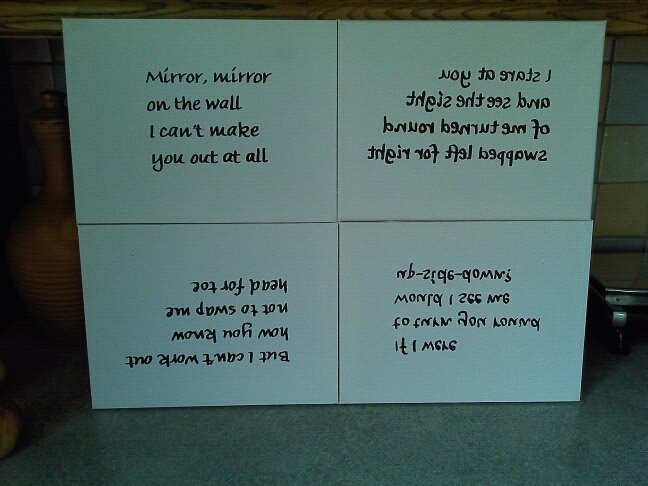
As for the poem in metal - I still intend to create this. A project for the longer term perhaps.
Tuesday, September 21, 2010
MuBu Blog: Foxton Locks
Miles Travelled = 37.5
Museums Visited = 1
Mood = Awe
I’d been to Foxton before. I went to watch narrowboats making unhurried progress up and down the famous staircase of 10 locks and to marvel at the remains of the lift that once winched wider beamed barges between the upper and lower levels of the canal. I also went to walk the towpath and enjoy the peace and abundant wildlife.
But I never went into the museum.
Why? I now blush to admit that, having paid £2 to park the car, I didn’t want to hand over a further £2.50 to look round the collection. Miserly, I know.

But as it turns out, Foxton Canal Museum is the first stop on my journey around the heritage sites of the East Midlands...
For the full article please go to Digital Writer in Residence blog on the MuBu website.
Monday, September 20, 2010
MuBu Digital Writer in Residence
I've just started working as Digital Writer in Residence for an East Midlands Museums project called 'MuBu'. I've been hinting at this for some time, but haven't been able to be more open about it because we were going through the usual administrative hurdles and getting the project web pages established.
But we are now up and running, so...

Here is a link to the MuBu Digital Writer in Residence project page.
I won't be duplicating all my MuBu blog articles here, so if you'd like to follow the journey, you could subscribe or bookmark that site.
And please give feedback here or there if you feel able. It's all very pleasant seeing web traffic statistics and knowing, in an abstract sense, that a couple of hundred people have visited the site today. But feedback is the lifeblood of the blogger.
But we are now up and running, so...
Here is a link to the MuBu Digital Writer in Residence project page.
I won't be duplicating all my MuBu blog articles here, so if you'd like to follow the journey, you could subscribe or bookmark that site.
And please give feedback here or there if you feel able. It's all very pleasant seeing web traffic statistics and knowing, in an abstract sense, that a couple of hundred people have visited the site today. But feedback is the lifeblood of the blogger.
Wednesday, September 15, 2010
Generating Story Ideas
Where to find seed ideas for stories? Here are five ideas and observations:
Many stories come from asking questions. What would happen if... Thought is free so be as wild as you like. What would happen if a whale materialised high above the planet? No, wait, someone already wrote that one.
Stories can come from extrapolation. Read the driest news article from the most serious paper, then ask yourself about the people the story implies. The people in the background.
Don't be afraid of using up all your story ideas. The more stories you tell, the faster you'll find new ideas coming to you. The world is full of stories. All we have to do is train ourselves to notice them.
Other people's lives are a great source of story ideas. Happily, people love to talk about themselves. It is their favourite subject. Be a good listener and you'll have more stories than you can write.
I have a faulty digital radio that cuts out at random, usually leaving sentences unfinished. It's exasperating at times, but perfect for a storyteller. When the radio dies, my mind jumps forward, trying to complete the story.
And I am willing to sell this faulty digital radio/story generating machine. All reasonable offers considered. Now, that gives me an idea for a story...

Friday, August 20, 2010
2D Cinema vs 3D
The 2D vs 3D cinema debate rumbles on, though the studios seem committed to the new technology.
In the old days of cinema, before polarising glasses, I never used to sit irritated in the dark thinking - this is far too flat for me. Why? Because through the art of the cinematographer, the image projected onto the 2D screen had 3D depth.
It is a trick of the mind and the eye so subtle that I was never even aware of it until I started to make films myself. The subject - the thing on the screen which the film maker wanted to direct my eye to - was in perfect focus. Other things, closer to the camera or further away, were softened. The slightest of out-of-focus blur.
This so closely maps onto the way we experience depth of field in everyday life that in watching a 2D movie, the mind tells us some things are further away and other things closer. A flat screen becomes 3D.
But in the old days those three dimensions were trapped behind the screen. Modern 3D extends out into the space between the screen and the audience. It offers that spooky moment when the Cheshire Cat hovers in the air just in front of you and speaks in Stephen Fry's voice.

For that moment of magic however, a payment is required. A thirty percent loss in colour. The hassle of having a pair of uncomfortable glasses pressing down on your nose - over your own glasses if you are short sighted like me. And a substantially more expensive cinema ticket.
There is also a strange mismatch between the old and the new systems of indicating depth. The subject is still in focus, the background and foreground are out of focus. But now some of those out of focus things are floating around in the air just in front of you. I find my eye is no longer pulled only to the thing I should be looking at, but jumps between things at different depths. They remain out of focus, which my brain finds hard to accept. The experience is disorientating and mildly unpleasant.
Perhaps we are in an age similar to the end of the silent era, when cinematographers were experimenting with the new technology and hadn't quite got it right. Or perhaps this is an unneeded technology. Time will tell. But for now, given the option, I'll be going for 2D screenings.
And here, for your enjoyment, is Mark Kermode and Simon Miller's revolutionary invention - glasses that allow you to see 3D screenings in spectacular, immersive 2D.
In the old days of cinema, before polarising glasses, I never used to sit irritated in the dark thinking - this is far too flat for me. Why? Because through the art of the cinematographer, the image projected onto the 2D screen had 3D depth.
It is a trick of the mind and the eye so subtle that I was never even aware of it until I started to make films myself. The subject - the thing on the screen which the film maker wanted to direct my eye to - was in perfect focus. Other things, closer to the camera or further away, were softened. The slightest of out-of-focus blur.
This so closely maps onto the way we experience depth of field in everyday life that in watching a 2D movie, the mind tells us some things are further away and other things closer. A flat screen becomes 3D.
But in the old days those three dimensions were trapped behind the screen. Modern 3D extends out into the space between the screen and the audience. It offers that spooky moment when the Cheshire Cat hovers in the air just in front of you and speaks in Stephen Fry's voice.

For that moment of magic however, a payment is required. A thirty percent loss in colour. The hassle of having a pair of uncomfortable glasses pressing down on your nose - over your own glasses if you are short sighted like me. And a substantially more expensive cinema ticket.
There is also a strange mismatch between the old and the new systems of indicating depth. The subject is still in focus, the background and foreground are out of focus. But now some of those out of focus things are floating around in the air just in front of you. I find my eye is no longer pulled only to the thing I should be looking at, but jumps between things at different depths. They remain out of focus, which my brain finds hard to accept. The experience is disorientating and mildly unpleasant.
Perhaps we are in an age similar to the end of the silent era, when cinematographers were experimenting with the new technology and hadn't quite got it right. Or perhaps this is an unneeded technology. Time will tell. But for now, given the option, I'll be going for 2D screenings.
And here, for your enjoyment, is Mark Kermode and Simon Miller's revolutionary invention - glasses that allow you to see 3D screenings in spectacular, immersive 2D.
Tuesday, August 17, 2010
Dyslexia, Memory, Socrates and Smartphones
Socrates disapproved of writing. It was not an aid to memory he said, but a replacement. If people could use symbols on a sheet of paper to record information, why would they bother to develop the latent power of their minds?
Socrates was right. As literacy spread, the use of memorization techniques dwindled. The art of memorization used to be part of the foundation of learning. But from the time I entered primary school to the day I graduated from university, only one teacher bothered to tell me how to remember things.
Even he only mentioned memory two times (as far as I can recall). Once to let us know that there was a difference between short, medium and long term memory. And once, after using a particularly entertaining simile, when he told us that the ruder the imagery we connect to a memory, the easier it would be to hold on to. (Alas I cannot repeat the image that he shared with us that day because it would never get through adult web content filters.)
Few today would say that the exchange of literacy for memorization technique was not a trade worth making. But for dyslexics, who may have particular difficulty with short term memory, memorization techniques can still be very useful. The loci system, for example, which has become a powerful tool for me, turning an area of weakness into a strength.
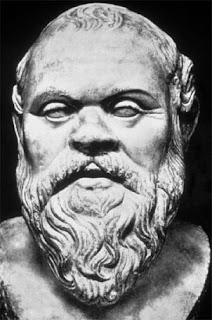
But if writing was an anathema to Socrates, what would he have said about the information revolution?
Followers of this blog will know that I recently bought a Dell Streak smartphone/tablet to help me with organization. I've had it a week now and have discovered that it is helping me to remember things in a way I had not anticipated.
How long until the parking expires? When should I head in to town to the Writers' Club meeting? When will I need to collect my wife from the train station on Wednesday? Two dyslexic issues converge on questions such as these: short term memory and tracking the flow of time. But by using the calendar alarm on the Dell Streak, I now don't need to remember. This may sound trivial, but it removes the layer of background anxiety that goes with struggling to do something one is congenitally poor at.
What would Socrates say? He'd probably tell me to work on the memory rather than using an external solution. But perhaps by removing the anxiety associated with remembering times, the smartphone will give me the space to do just that.
We will see.
Socrates was right. As literacy spread, the use of memorization techniques dwindled. The art of memorization used to be part of the foundation of learning. But from the time I entered primary school to the day I graduated from university, only one teacher bothered to tell me how to remember things.
Even he only mentioned memory two times (as far as I can recall). Once to let us know that there was a difference between short, medium and long term memory. And once, after using a particularly entertaining simile, when he told us that the ruder the imagery we connect to a memory, the easier it would be to hold on to. (Alas I cannot repeat the image that he shared with us that day because it would never get through adult web content filters.)
Few today would say that the exchange of literacy for memorization technique was not a trade worth making. But for dyslexics, who may have particular difficulty with short term memory, memorization techniques can still be very useful. The loci system, for example, which has become a powerful tool for me, turning an area of weakness into a strength.

But if writing was an anathema to Socrates, what would he have said about the information revolution?
Followers of this blog will know that I recently bought a Dell Streak smartphone/tablet to help me with organization. I've had it a week now and have discovered that it is helping me to remember things in a way I had not anticipated.
How long until the parking expires? When should I head in to town to the Writers' Club meeting? When will I need to collect my wife from the train station on Wednesday? Two dyslexic issues converge on questions such as these: short term memory and tracking the flow of time. But by using the calendar alarm on the Dell Streak, I now don't need to remember. This may sound trivial, but it removes the layer of background anxiety that goes with struggling to do something one is congenitally poor at.
What would Socrates say? He'd probably tell me to work on the memory rather than using an external solution. But perhaps by removing the anxiety associated with remembering times, the smartphone will give me the space to do just that.
We will see.
Subscribe to:
Posts (Atom)